
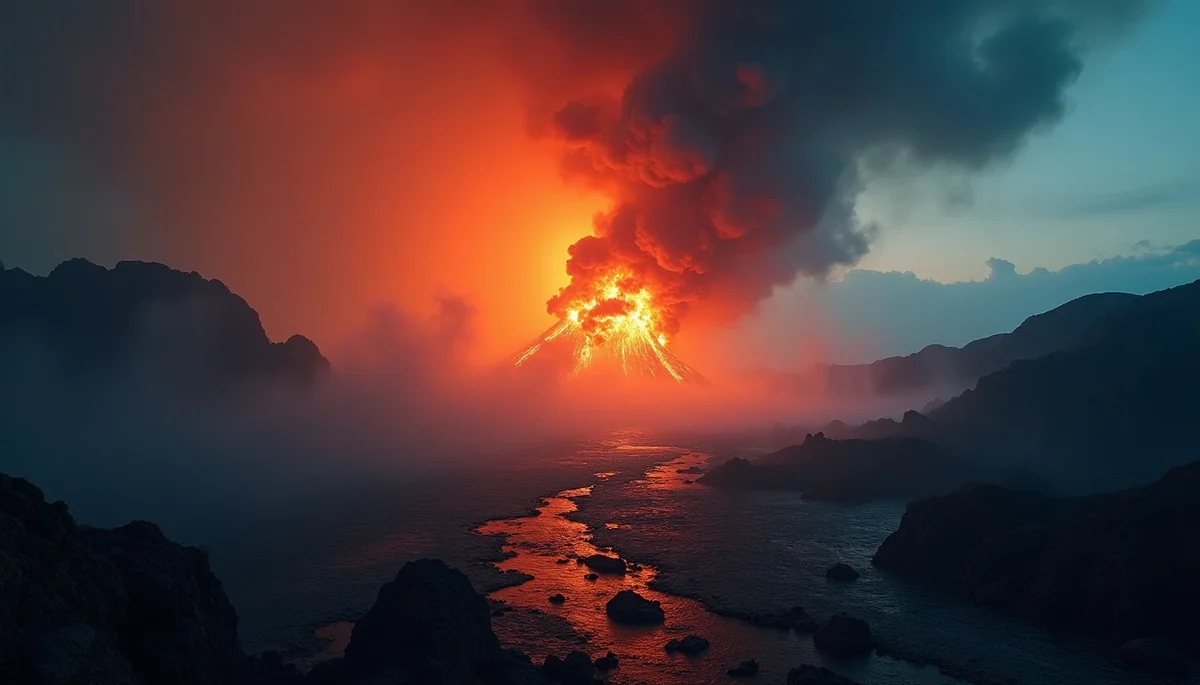
New research published this week reveals how volcanic eruptions in the mid-1340s triggered the catastrophic chain of events that brought the Black Death to Europe—a finding that carries unsettling resonance as seismic monitors track heightened volcanic and earthquake activity across multiple continents today.
Scientists examining the origins of history's deadliest pandemic have identified a 'perfect storm' of environmental factors, with volcanic eruptions serving as the initial catalyst. The eruptions disrupted weather patterns, triggered famine conditions, and ultimately created the ecological circumstances that allowed plague-carrying rodents and fleas to spread the disease that would kill an estimated 75 to 200 million people. The research, detailed in Ars Technica, underscores how interconnected natural disasters can cascade into civilizational catastrophe—a pattern biblical scholars have long recognized in prophetic texts describing the end times, where earthquakes, famines, and pestilence appear in sequence.
That historical parallel gains contemporary weight as volcanic monitoring stations report significant activity across the Pacific Ring of Fire. Shiveluch volcano in Russia's Kamchatka peninsula continues explosive activity, with ash plumes reaching 12,000 feet. Japan's Sakurajima remains active, while Guatemala's Fuego and Santiaguito volcanoes, Mexico's Popocatépetl, and Indonesia's Soputan and Merapi all show ongoing eruptions. The concentration of simultaneous volcanic events across disparate geographic regions represents an unusually active period for Earth's crust.
Seismic data reinforces this picture of geological unrest. The USGS recorded 544 earthquakes in the past 24 hours, including two magnitude 5.0+ events. A 5.5 magnitude quake struck 201 kilometers southwest of José María Morelos, Mexico, while a 5.1 magnitude tremor hit near Petropavlovsk-Kamchatsky, Russia. Additional significant seismic events were recorded in Uzbekistan, California's Fortuna region, Louisiana, and Texas. The global distribution of these tremors—from Central Asia to the Americas—demonstrates the interconnected nature of tectonic stress patterns.
While natural forces reshape the physical landscape, economic tremors of a different sort are reshaping global finance. The BRICS+ bloc continues advancing its 'Unit' project, a proposed alternative to dollar-denominated trade that analysts describe as the most viable challenge yet to American financial hegemony. The initiative, backed by gold and a basket of member-nation currencies, represents what geopolitical analyst Pepe Escobar calls a potential break from 'the US dollar's stranglehold on global trade and investment.' This monetary realignment echoes prophetic descriptions of shifting power structures in the last days.
Meanwhile, the U.S. Commodity Futures Trading Commission approved leveraged spot crypto trading on federally regulated exchanges December 4, opening the door for institutional giants managing an estimated $25 trillion to enter cryptocurrency markets. Acting Chairman Caroline Pham's decision marks the first time spot Bitcoin and other digital assets can trade with margin under CFTC oversight—a development that could accelerate the integration of digital currencies into mainstream finance.
In the Middle East, tensions between Egypt and Ethiopia over the Grand Ethiopian Renaissance Dam on the Blue Nile continue escalating, with Ethiopian officials accusing Cairo of 'using threats and regional pressure.' The dispute over Nile waters—a river system that has sustained civilizations since biblical times—carries profound implications for regional stability and the 100 million people who depend on its flow.
For those watching prophetic patterns, the convergence of geological instability, economic restructuring, and regional conflicts over essential resources presents a familiar constellation. Jesus warned His disciples that 'nation will rise against nation, and kingdom against kingdom. There will be famines and earthquakes in various places. All these are the beginning of birth pains.' Whether these current events represent those birth pains or merely the normal turbulence of a fallen world, they merit close attention. The historical record of the Black Death demonstrates how quickly environmental disruptions can cascade into civilizational crisis—a lesson that remains urgently relevant as we monitor today's volcanic plumes and seismic readings.