
Space agencies from more than 23 nations have launched the largest planetary defense exercise in human history, a coordinated drill led by NASA and the European Space Agency that reveals both humanity's remarkable technological capabilities and its growing unease about cosmic threats. The exercise, running through the coming weeks, simulates response protocols for potential asteroid impacts—a scenario that has captured attention from prophetic scholars who note the biblical precedent for celestial objects playing decisive roles in earth's future.
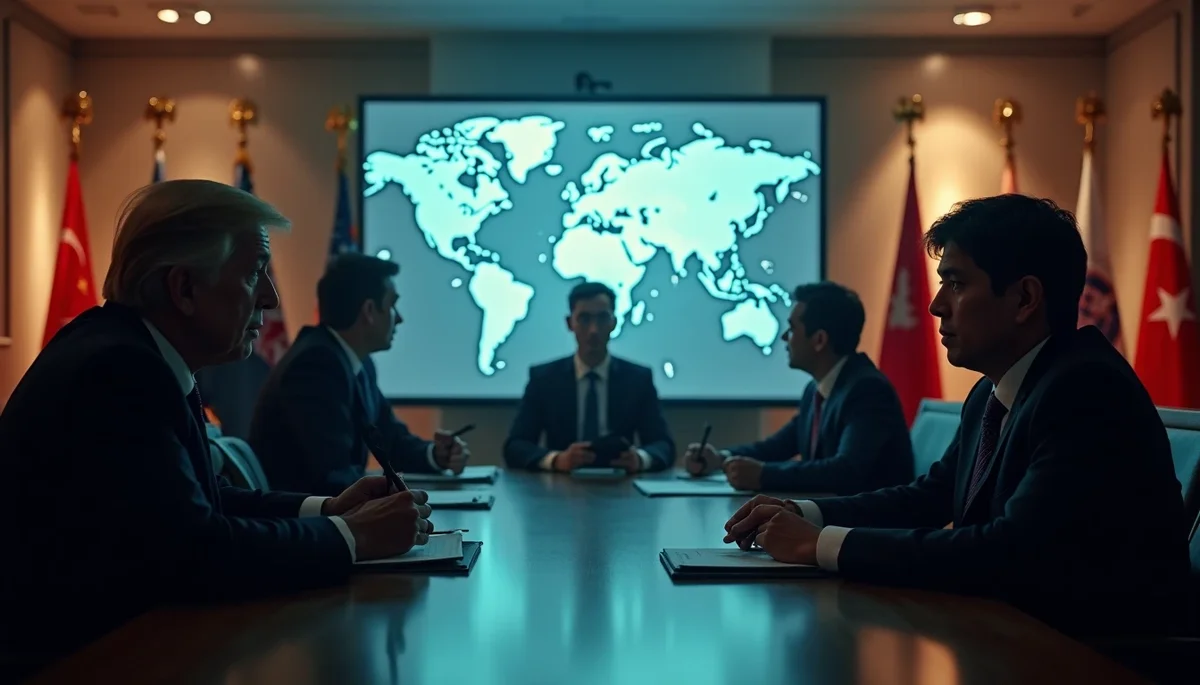
The timing of this unprecedented cooperation stands in stark contrast to the geopolitical fragmentation playing out across multiple fronts. In Miami today, U.S. Special Envoy Steve Witkoff convenes representatives from Qatar, Egypt, and Turkey to discuss the next phase of Gaza ceasefire implementation. The absence of Israeli representatives at this particular gathering underscores the complexity of negotiations, even as Prime Minister Benjamin Netanyahu prepares for a critical Washington visit at month's end that could reshape Israel's regional posture across Gaza, Lebanon, Syria, and Iran.
The Trump administration has signaled growing frustration with what officials describe as obstacles piling up in the transition to Phase 2 of the Gaza plan. Administration sources suggest concerns that Israel may be intentionally complicating the process—a charge that adds tension to an already volatile situation. Meanwhile, U.S. Ambassador Mike Huckabee struck a cautiously optimistic tone in recent remarks, expressing hope that Iran will 'come to its senses' regarding its nuclear program while noting progress in discussions with Saudi Arabia and Lebanon.
The question of peacekeepers in Gaza looms large over these negotiations. Historical precedent offers sobering lessons: when peace is declared without power to enforce it, violence does not disappear—it simply waits. Israel's concerns about who international stabilization forces would actually monitor reflect hard-won experience with UN missions that have often failed to prevent attacks while constraining Israeli defensive responses.
On the financial front, JPMorgan analysts have tempered expectations for the stablecoin market, pushing back against projections of a $1 trillion market by 2028. The bank's Wednesday report notes that while the market has swelled by roughly $100 billion this year to over $300 billion, growth remains tethered to broader cryptocurrency performance. This assessment comes as the White House's crypto policy chief confirms that the Digital Asset Market Clarity Act is slated for Senate markup in January—potentially historic legislation that could reshape digital finance regulation.
Geopolitical analysts are increasingly discussing a 'C5' format—regular consultations between the U.S., China, Russia, India, and Japan—as a pragmatic framework for managing what some call the 'global systemic transition.' The concept acknowledges a multipolar reality where no single power can unilaterally shape outcomes, requiring new diplomatic architectures to address emerging challenges.
The earth itself continues its restless activity. Friday's global earthquake report logged seven quakes magnitude 5.0 or greater, including a 5.7 tremor near Fiji and a 5.1 near the Philippines, while the American West Coast endures what observers call a 'slow-motion disaster'—atmospheric rivers dumping trillions of gallons of water, with wind speeds reaching 144 mph and flooding expected to close roads for months.
For those watching prophetic patterns, the convergence is notable: unprecedented international cooperation on cosmic threats, realignment of Middle Eastern alliances, digital currency infrastructure taking shape, and natural upheaval on multiple continents. The planetary defense drill serves as an apt metaphor for the broader moment—humanity preparing for impacts it cannot fully predict, building systems of response while ancient tensions continue to simmer. What emerges from Miami's negotiations and Netanyahu's Washington visit may well determine whether the next phase brings genuine stabilization or merely a pause before the next escalation.