
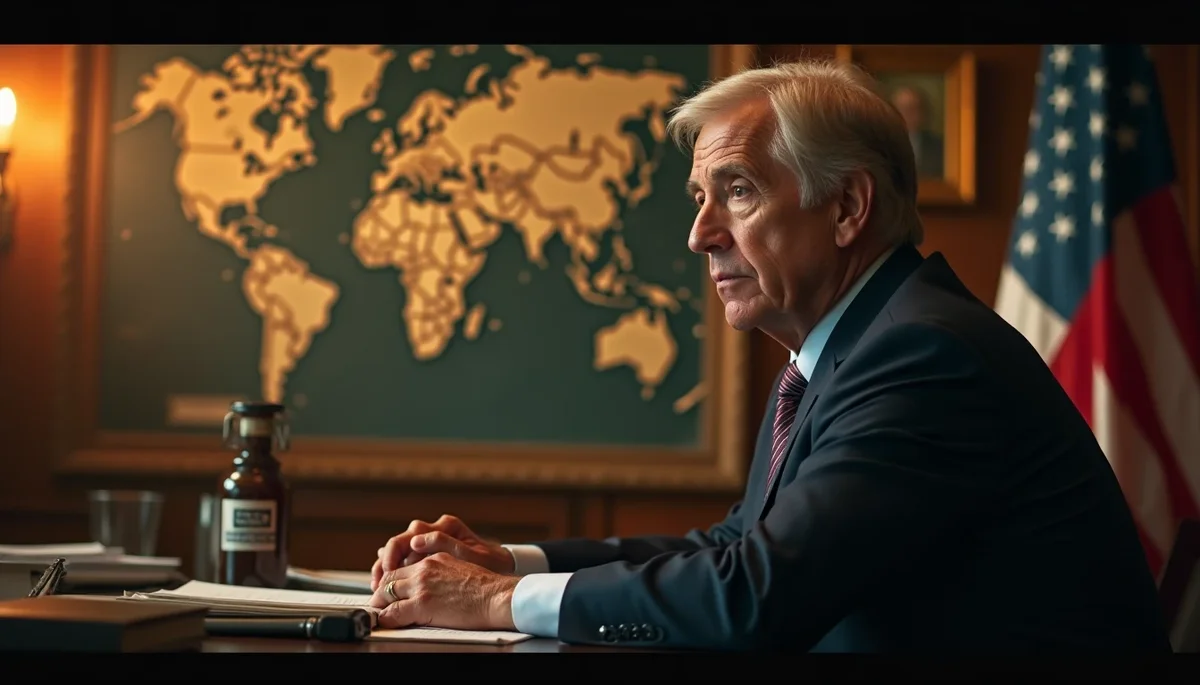
Iranian Parliament Speaker Mohammad Ghalibaf delivered an unmistakable message to Washington on Saturday: any American military intervention in Iran's handling of ongoing mass protests will transform U.S. forces stationed across the Middle East into legitimate targets. The threat, broadcast through state media, represents Tehran's most direct warning since protests erupted across the Islamic Republic, and it arrives as President Donald Trump declared America stands "locked and loaded" regarding the Iranian situation.
The escalation follows Trump's provocative statements on Truth Social, which drew an immediate response from Iranian National Security Council Secretary Ali Larijani. "Trump should understand that U.S. interference in this internal matter would destabilize the entire region and damage American interests," Larijani stated. "The American public should know this escalation was started by Trump." Sources in the region indicate that Iranian military commanders have quietly repositioned assets in recent days, suggesting the regime's threats carry operational weight beyond mere rhetoric.
Yet seasoned observers urge caution regarding Western triumphalism over Iran's internal unrest. Former CIA analyst Larry Johnson, writing this week, warns that neoconservative voices are engaging in "premature celebration" over the protests. The intelligence veteran notes that previous waves of Iranian dissent—from the 2009 Green Movement to the 2019 fuel protests—ultimately failed to dislodge the regime, which has proven remarkably resilient at suppressing domestic challenges while maintaining regional influence through proxy networks.
The Iran crisis unfolds against a broader backdrop of global instability. Russia continues expanding its biometric identification infrastructure, introducing new facial recognition applications that allow citizens to use their faces for an expanding array of transactions and verifications. The Kremlin's digital identity push mirrors similar initiatives across multiple nations, raising concerns among privacy advocates about the emerging architecture of surveillance states. For students of biblical prophecy, such developments echo long-standing warnings about systems enabling comprehensive tracking of populations—though analysts note these technologies remain fragmented rather than unified under any single authority.
Meanwhile, the earth itself continues its restless activity. The USGS recorded a significant M6.5 earthquake striking Guerrero, Mexico, on January 2nd, prompting yellow alerts for potential shaking-related casualties. The agency documented over 580 seismic events globally in the past 24 hours, including a M5.5 tremor near Martinique in the Caribbean. While individual earthquakes rarely carry prophetic weight, the cumulative pattern of seismic activity across multiple regions—from Mexico to the Pacific islands of Tonga—contributes to an atmosphere of geological unease that has characterized recent months.
The Gaza situation remains frozen in diplomatic amber. Analysis from regional correspondents suggests that despite headline-grabbing statements from the incoming Trump administration, core questions regarding Israeli withdrawal, Hamas disarmament, and Gaza's future governance remain deliberately unaddressed. One Egyptian observer characterized current peace prospects with the local expression "ashem iblis biljanna"—pipe dreams. The conflict management approach preserves existing dynamics while leaving Palestinian populations without a viable political horizon, ensuring the crisis will persist well into 2026.
Adding to the complex picture, the United States enters the new year carrying a national debt that has smashed through $38.5 trillion—a threshold analysts at the Committee for a Responsible Federal Budget had not expected until 2030. The fiscal reality constrains American options abroad even as commitments multiply, from potential Iranian confrontation to ongoing support for regional allies.
For those monitoring these convergent pressures, the critical variable remains Iran. Should protests intensify and Washington perceive an opportunity for regime change, Tehran's explicit threat to American installations across the Middle East transforms from diplomatic posturing to operational doctrine. The coming weeks will reveal whether cooler heads prevail or whether the Persian powder keg finds its spark.