
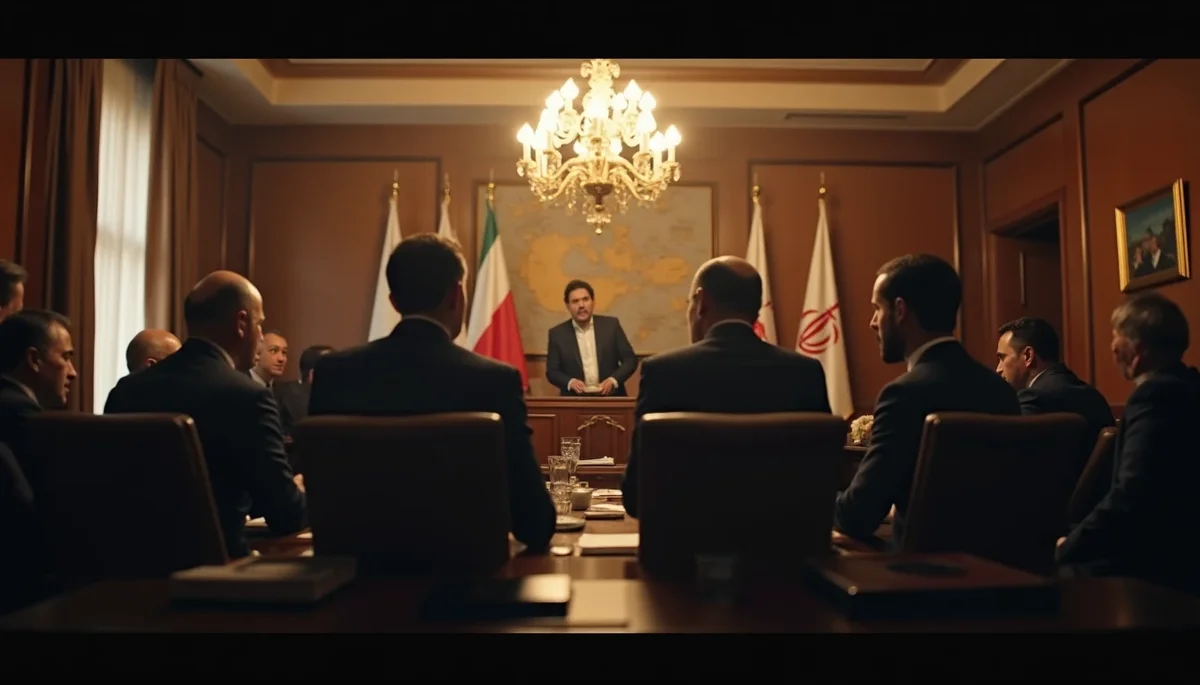
Tehran executed its tenth accused Israeli spy since June this morning, a grim milestone that underscores the Islamic Republic's deepening paranoia following its brief but devastating conflict with Israel and the United States earlier this year. Aghil Keshavarz, a 27-year-old convicted of collaborating with Mossad, was put to death after Iran's Supreme Court upheld his espionage conviction, according to Mizan, the judiciary's official news agency. The execution represents the latest salvo in what sources in the region describe as an unprecedented internal purge, one that reveals just how profoundly the twelve-day war rattled Iran's security apparatus.
The timing proves significant. As Iran's regional influence continues to erode—with Hezbollah weakened in Lebanon and proxy networks disrupted across the Middle East—Tehran appears to be turning inward, seeking enemies within its own borders. Intelligence analysts note that the pace of executions has accelerated dramatically since summer, suggesting the regime perceives infiltration at levels not seen since the early revolutionary period. This internal crackdown coincides with what Jerusalem Post analysts characterize as Turkey's emergence as a new strategic threat to Israel and Western interests, as Ankara moves to fill the vacuum left by Iran's diminished capacity.
Meanwhile, a different kind of reckoning unfolds in American courts. A music teacher has filed suit against StopAntisemitism, the pro-Israel watchdog organization that has claimed credit for getting hundreds of individuals fired from their jobs over social media posts expressing solidarity with Palestinians. The lawsuit, reported by The Intercept, marks the first significant legal challenge to the organization's controversial blacklisting practices. StopAntisemitism, known for targeting celebrities like children's entertainer Ms. Rachel, has increasingly focused on private individuals—teachers, healthcare workers, service industry employees—whose posts the organization deems antisemitic.
The case raises profound questions about the boundaries between combating genuine hatred and suppressing political speech. In New South Wales, Australia, Premier Chris Minns announced plans to ban the phrase "globalise the intifada" following the deadly Bondi shooting that claimed fifteen lives—the deadliest gun violence incident in Australia in nearly three decades. The proposed legislation reflects a global struggle to define where legitimate criticism ends and incitement begins, a tension that biblical scholars note has accompanied Jewish communities throughout their diaspora experience.
Pastor Damian Kyle of Calvary Chapel Modesto addressed this very theme in remarks highlighted by Harbingers Daily this week, exploring what he termed "God's abiding heart of love for the Jewish people" amid intensifying campus antisemitism. "The world is dramatically turning against them again, despite calls to 'Never Forget' after the Holocaust," Kyle observed, echoing a sentiment increasingly voiced in evangelical circles. The convergence of legal battles over speech, state crackdowns on perceived enemies, and rising tensions on university campuses creates what one diplomatic source described as "a perfect storm of competing grievances with no clear resolution in sight."
The earth itself seems restless. California's San Ramon area experienced a swarm of earthquakes overnight, with magnitudes reaching 4.0 and generating over two thousand felt reports from residents. Alaska recorded a 3.4 magnitude tremor north of Yakutat, while scientists continue sounding alarms about three major fault zones across the United States. Solar activity has also jumped to moderate levels, with two M-class flares erupting from opposite sides of the solar disk—an unusual configuration that space weather analysts are monitoring closely for potential geomagnetic effects.
In financial markets, Poland's parliament has halted cryptocurrency legislation discussions until January after the Sejm passed a controversial bill nearly identical to one recently vetoed by the president. South Korean lawmakers, meanwhile, are pushing for formal stablecoin frameworks to protect what Representative Min Byoung-dug calls the nation's "payment sovereignty" in a rapidly evolving digital financial landscape.
For those watching these converging currents—geopolitical realignment, domestic crackdowns, cultural battles over speech, and natural phenomena—the closing days of 2025 offer little comfort but considerable clarity. The fault lines, both geological and ideological, are shifting. What emerges in 2026 will depend largely on which fractures give way first.