
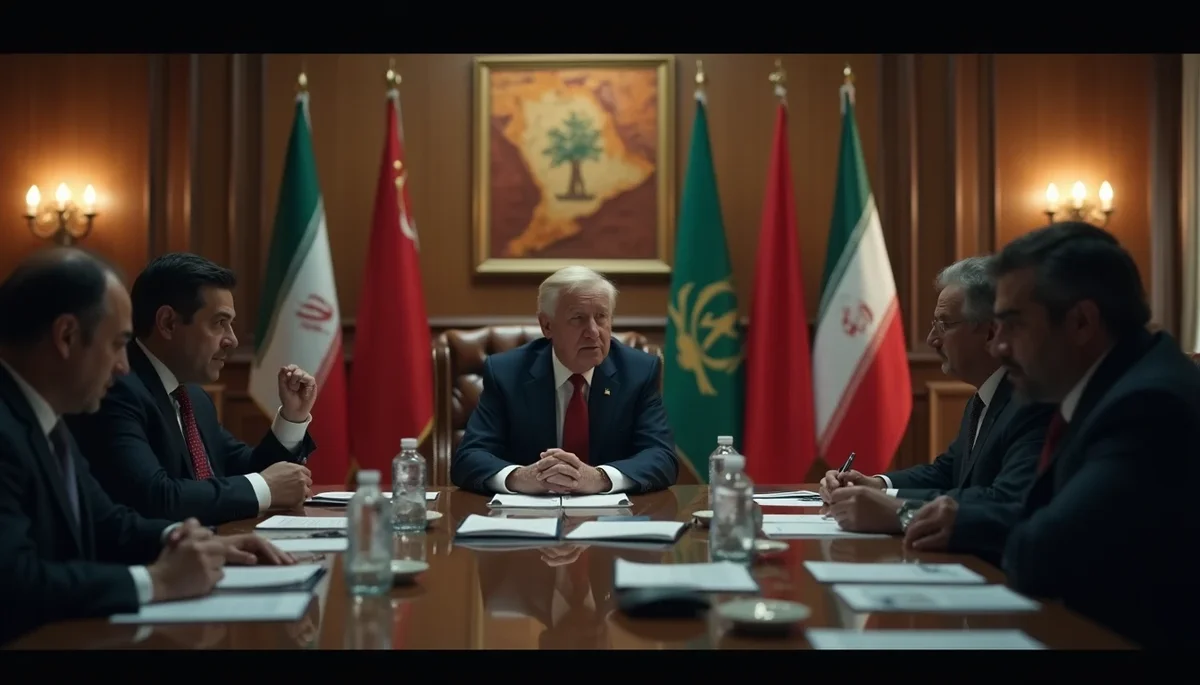
The Islamic Republic of Iran enters its eleventh consecutive day of mass protests, with sources in the region indicating this uprising differs fundamentally from previous waves of dissent. Unlike the 2022 demonstrations sparked by the death of Mahsa Amini, the current unrest stems from economic desperation that threatens the regime's very foundations. At least three dozen protesters have been killed, with more than 2,000 arrested, as Iranian Crown Prince Reza Pahlavi—son of the deposed Shah—issued a direct challenge to security forces: choose between protecting the regime or the people.
Tehran's response has grown increasingly bellicose. Iran's army chief warned that statements from Washington and Jerusalem regarding the protests constitute a threat requiring 'harsh response,' announcing the execution of another alleged Mossad spy as demonstrations continue. The regime's messaging reveals acute anxiety; sources familiar with Iranian internal communications describe a leadership struggling to maintain narrative control while the rial plummets and basic goods become unaffordable for ordinary citizens.
This instability arrives as Israel's military quietly prepares for what defense planners describe as 'converging threats on all fronts.' The Israel Defense Forces are not planning for a limited campaign or single-theater conflict, but rather the possibility of simultaneous operations stretching from Lebanon to Iran, from Gaza to the West Bank. The search for the remains of Ran Gvili, the last Israeli captive held in Gaza, resumed this week in the Zeitoun neighborhood after weather delays—a somber reminder that the October 7th wounds remain open even as new threats gather.
The Lebanese front presents its own complications. Despite a U.S.-brokered ceasefire established in November 2024, UNIFIL has documented more than 10,000 Israeli violations, including 7,500 airspace incursions and 2,500 ground violations. Analysts in Beirut warn that Hezbollah will not proceed with the second phase of disarmament while Israeli strikes continue. The fragile arrangement appears increasingly untenable, with regional observers noting that neither side has demonstrated genuine commitment to de-escalation.
Meanwhile, a quieter transformation unfolds in the Gulf. EDF Group, the French energy giant, has signed a memorandum of understanding with Saudi-based droppRWA Limited to explore blockchain tokenization of energy assets in the Kingdom. This development signals Riyadh's accelerating embrace of digital financial infrastructure—a trend that observers of prophetic significance note aligns with broader movements toward centralized, trackable economic systems. The tokenization of carbon credits and energy assets represents precisely the kind of technological framework that could eventually facilitate unprecedented financial surveillance.
The persecution of believers continues to demand global attention. Nigeria's president has acknowledged that his administration must do more to protect Christian communities following brutal attacks on villages and churches as 2025 concluded. The question posed by advocates—whether the world will finally face the truth about what's happening to Nigerian believers—echoes a pattern seen throughout history when the faithful face systematic violence while international bodies remain largely silent.
For those watching these developments through a prophetic lens, the convergence is striking. Economic systems in the Middle East's most powerful nations are being restructured around digital frameworks. Israel faces the prospect of multi-front warfare while its northern neighbor teeters between ceasefire and renewed conflict. Iran's theocratic regime confronts existential economic pressure even as it threatens preemptive action against Jerusalem. The prophet Ezekiel's vision of a coalition rising against Israel from the north—traditionally understood to include Persia—takes on renewed relevance as these fault lines deepen.
What demands close attention in the days ahead: whether Iran's security apparatus fractures under sustained protest pressure, how Israel responds to continued Lebanese ceasefire violations, and whether Saudi Arabia's digital infrastructure investments accelerate regional adoption of tokenized financial systems. The region stands at an inflection point where economic desperation, military preparation, and technological transformation intersect in ways that merit careful observation.