
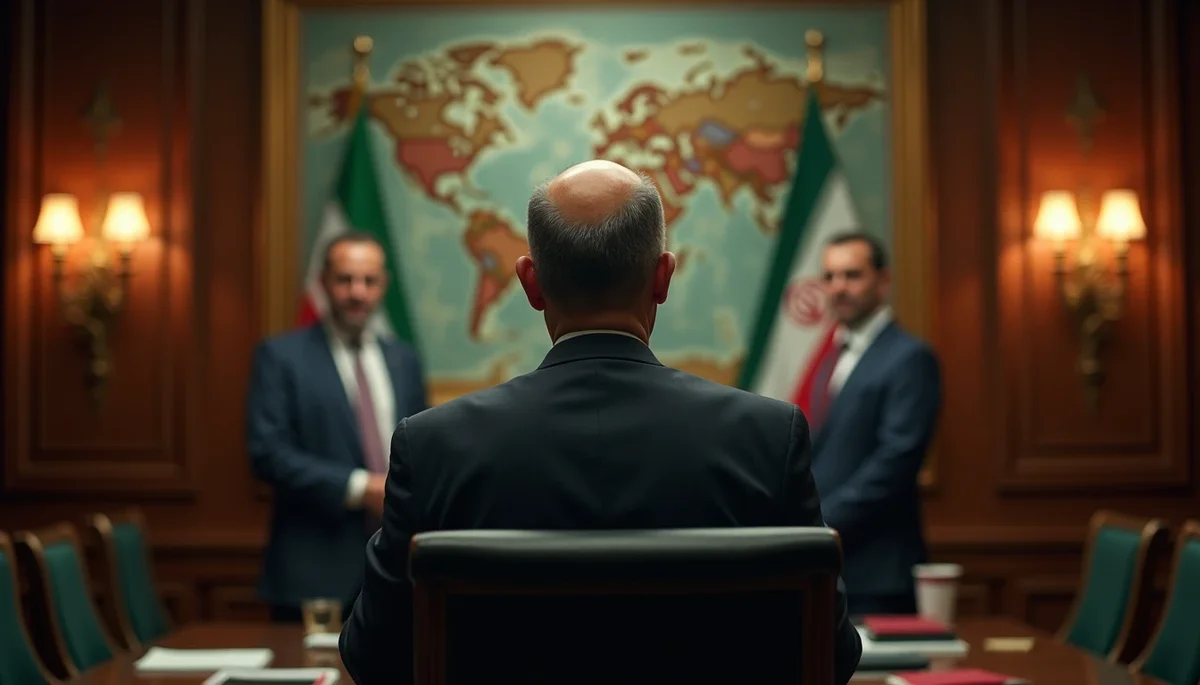
Iranian President Masoud Pezeshkian declared Saturday that Tehran is engaged in 'full-fledged war with America, Israel, and Europe,' a stark escalation in rhetoric that comes as the Islamic Republic's regional proxy network faces unprecedented pressure. Speaking to Iranian media, Pezeshkian claimed the current threat exceeds even the devastating Iran-Iraq war of the 1980s, while asserting Tehran stands ready to deliver 'a more decisive response' to its adversaries.
The declaration arrives at a pivotal moment for Iran's axis of resistance. Hamas, the Palestinian militant group that has served as a cornerstone of Tehran's regional strategy, is preparing internal elections to replace slain leader Yahya Sinwar, sources close to the organization told Saudi-owned Asharq Al Awsat TV. The succession battle pits two competing visions for the group's future: Khalil al-Hayya, who favors continued armed confrontation with Israel, against Khaled Meshal, who advocates pursuing Israeli withdrawal from Gaza through political agreements and reduced reliance on Iran in favor of stronger ties with moderate Arab states.
The leadership contest carries profound implications for the trajectory of the Gaza conflict and Iran's broader regional influence. A Meshal victory could signal a strategic pivot away from Tehran's orbit, potentially reshaping the diplomatic landscape across the Middle East. Meanwhile, France condemned Israeli gunfire in southern Lebanon that wounded a United Nations peacekeeper Saturday, describing it as part of a troubling pattern of incidents targeting the international force—a reminder that the multi-front conflict continues to simmer even as attention focuses on Gaza.
The human cost of this protracted struggle was underscored Friday when the movement dedicated to returning fallen Israeli soldier Hadar Goldin held its 400th and final protest. Eight years after Hamas captured Goldin's remains, supporters gathered to mark what they called a victory while vowing to continue advocating for Ran Gvili, Israel's last remaining hostage. 'We fought, and we won—Hadar is home,' declared Nahum Sheffer, though the celebration was tempered by the reality that one captive remains.
Arnold Roth, whose daughter Malki was among 16 murdered in the 2001 Sbarro pizzeria bombing in Jerusalem, continues his own decades-long quest for justice, demanding Jordan extradite the terrorist responsible to face American courts. His persistence speaks to a broader pattern: the unfinished business of accountability that shadows every chapter of this conflict.
In the West Bank, tensions flared anew when an Israeli reservist was released to house arrest after being filmed ramming an ATV into a Palestinian man who was praying roadside Thursday. The IDF confirmed the soldier's weapon was confiscated and his military service terminated, with authorities also investigating reports he fired at villagers before the ramming attack. Separately, Israeli settlers raided the Al-Malih community in the northern Jordan Valley Saturday, launching attacks on residents—incidents that underscore the volatile conditions across the occupied territories.
The prophetic dimensions of these developments are difficult to ignore. Iran's explicit declaration of war against Israel and the West echoes ancient patterns of coalition against Jerusalem, while the struggle for Hamas's soul between armed resistance and political accommodation reflects the perpetual tension between human diplomacy and divine sovereignty over the land. As 2025 draws to a close, the region stands at an inflection point: Iran doubling down on confrontation, its proxies fracturing, and the international community increasingly entangled in a conflict that refuses resolution by conventional means.
Watch for the Hamas leadership announcement in coming weeks—it may prove the most consequential development in determining whether 2026 brings escalation or an unexpected diplomatic opening.