
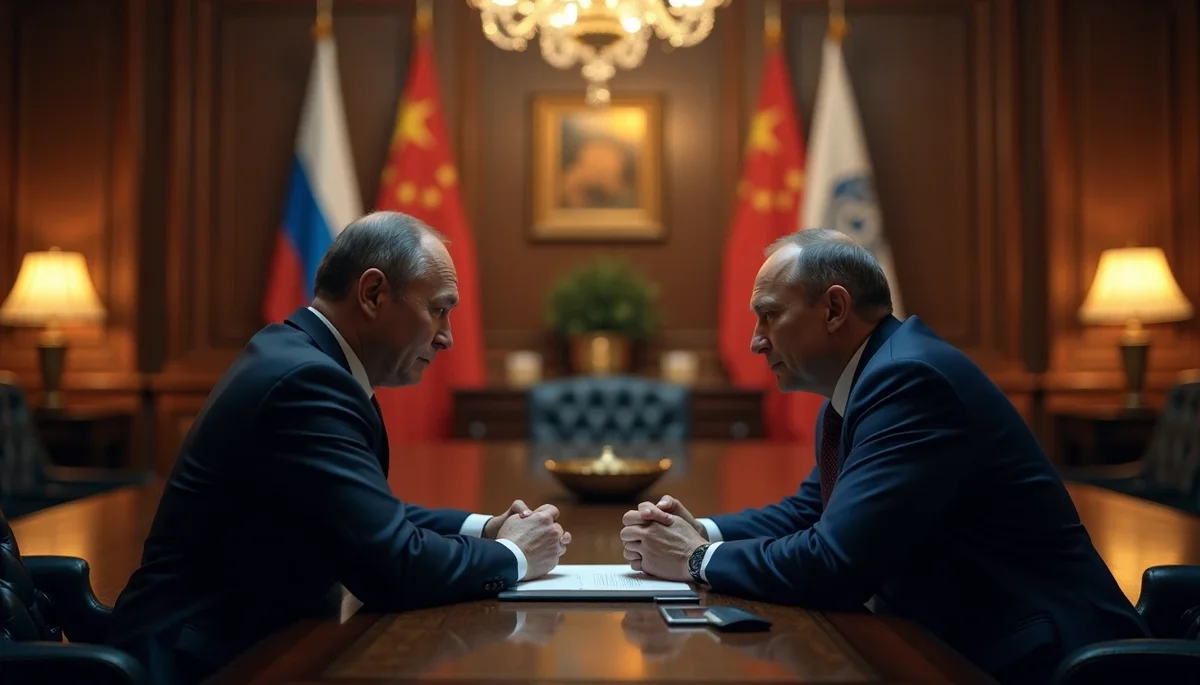
As 2025 draws to a close, Russia has positioned itself as a potential mediator in the escalating tensions surrounding Iran's nuclear program, even as unprecedented protests sweep through Iranian cities. Russian Foreign Ministry spokesperson Maria Zakharova called on 'hotheads to recognize the full perniciousness of their destructive course' and announced Moscow's readiness to help Tehran find solutions to its nuclear crisis. This diplomatic overture comes at a critical moment, with Foreign Minister Sergei Lavrov signaling Russia's willingness to serve as an intermediary—a development that carries profound implications for the prophetic landscape of the Middle East.
The timing proves significant. Inside Iran, citizens are taking to the streets in numbers not seen in years. The Iranian rial has collapsed to historic lows, with one million rials now worth less than a single US dollar. Economic desperation, compounded by years of sanctions and mismanagement under the Islamic Republic, has pushed ordinary Iranians to a breaking point. Videos documenting the growing unrest have spread across social media, revealing demonstrations in cities throughout the nation. For students of Scripture, the weakening of Persia's current regime—even as external powers jockey for influence—echoes the complex geopolitical realignments described in Ezekiel's prophecies concerning the latter days.
Meanwhile, a different kind of great power competition unfolds in the digital realm. Coinbase's Chief Policy Officer Faryar Shirzad delivered a stark warning to the US Senate this week: proposed restrictions on stablecoin interest payments could hand China a decisive advantage in the global race for digital currency dominance. Beijing has moved aggressively to make its central bank digital currency more attractive, recently announcing interest-bearing features for digital yuan wallets. 'The global digital currency landscape is becoming increasingly competitive,' Shirzad emphasized, urging lawmakers not to handicap American innovation through the pending GENIUS Act modifications.
The stablecoin debate represents more than financial policy—it touches on questions of monetary sovereignty and technological control that carry eschatological weight. As nations develop infrastructure for programmable money and centralized digital currencies, the architecture for economic systems described in Revelation 13 moves from theoretical to technical. China's push to expand digital yuan adoption, combined with American uncertainty about its own digital currency framework, suggests the foundation for globally integrated financial surveillance continues to take shape, regardless of which nation leads.
In the Gaza theater, Israel's ban on humanitarian organizations including Doctors Without Borders has drawn sharp international criticism, with Britain, Canada, and Japan warning of 'horrific' outcomes for civilians. The restrictions come as Israeli forces continue operations against Palestinian fishermen and maintain pressure throughout the territory. Lebanese officials, meanwhile, expressed concern following the Trump-Netanyahu summit, with Hezbollah-linked media reporting fears that Washington may be backing more aggressive Israeli action along the northern border. The ceasefire arrangements remain fragile, with Israeli strikes reported in Houla and Aita al Shaab in southern Lebanon.
The year closes with what prophecy watchers have termed a 'convergence generation' moment—multiple prophetically significant developments accelerating simultaneously. President Trump's directive to fast-track 6G technology development, explicitly including human implantable devices, adds another layer to an already complex technological landscape. Combined with the digital currency maneuvering, Iranian instability, and Russian diplomatic positioning, the final hours of 2025 present a tapestry of developments that merit careful observation. As the prophet Daniel was told, knowledge would increase in the latter days—and the pace of that increase shows no signs of slowing as we enter 2026.