
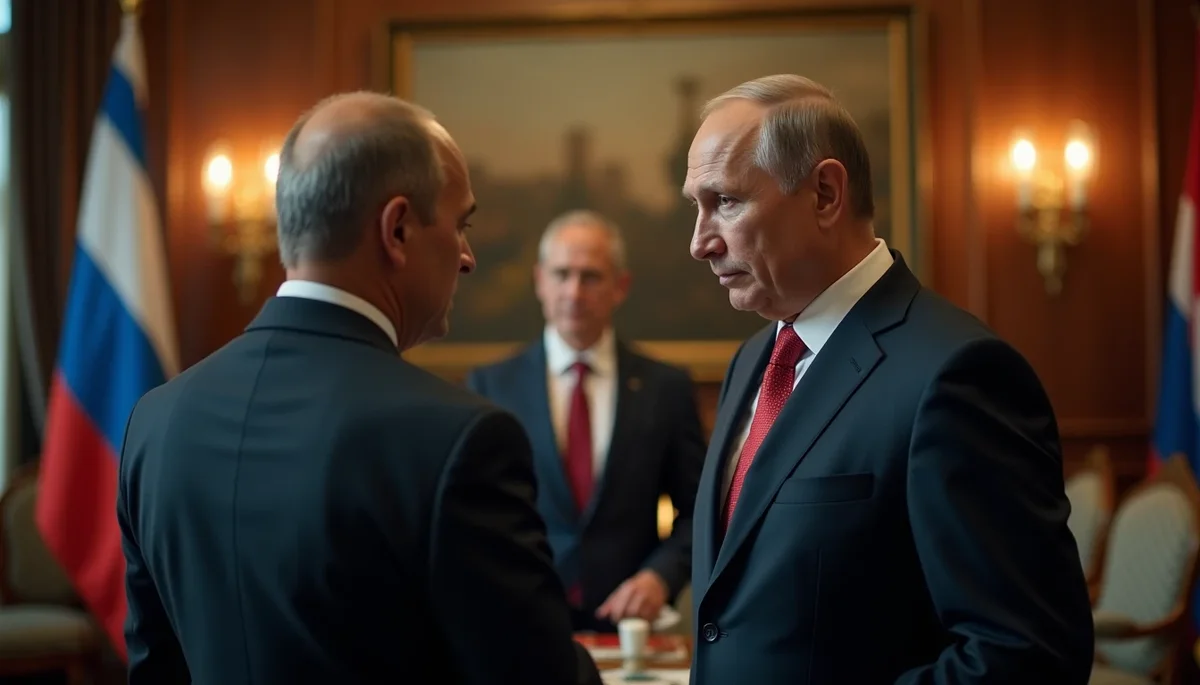
In a diplomatic configuration that would have seemed impossible just months ago, Israeli Prime Minister Benjamin Netanyahu has enlisted Russian President Vladimir Putin as an intermediary to convey calming messages to Tehran, while simultaneously pursuing what U.S. Ambassador Tom Barrack calls a 'breakthrough' in direct talks with Syria's new government. The parallel diplomatic tracks, revealed Monday by Israeli diplomatic sources to Kan 11 News, represent a fundamental reshaping of Middle Eastern power dynamics in the wake of Assad's fall and Iran's deepening isolation.
The Paris meetings between senior Israeli and Syrian officials, facilitated by Trump envoys Steve Witkoff and Jared Kushner, produced concrete results: the establishment of a joint 'fusion mechanism' for intelligence sharing, military de-escalation, and commercial cooperation. A senior Syrian official described the U.S.-led initiative as a 'historic opportunity,' though Damascus stressed that progress on 'strategic files' requires a binding timetable for complete Israeli withdrawal from positions held in southern Syria since December 2024. Netanyahu framed the talks as advancing 'in line with Trump vision,' signaling the incoming administration's active role in reshaping regional architecture.
Yet even as diplomatic channels multiply, the specter of violence persists. Israeli Defense Forces sources issued a stark warning Tuesday that Iran is actively plotting to assassinate Syrian President Ahmed al-Sharaa, working with 'additional hostile elements' to destabilize the nascent government. The warning underscores Tehran's desperate position—the same regime that Supreme Leader Khamenei reportedly has contingency plans to flee should domestic unrest escalate. Netanyahu's message through Putin carried both carrot and stick: Israel does not intend to attack Iran, but Tehran faces 'very severe consequences' if it renews nuclear programs or launches attacks.
The IDF's simultaneous announcement that it struck and eliminated two Hezbollah terrorists in southern Lebanon's Kherbet Selem area demonstrates that Israel continues enforcing red lines even while pursuing diplomacy. The terrorists were reportedly attempting to reestablish Hezbollah's military infrastructure—actions the IDF characterized as 'blatant violations' of ceasefire terms. Military analysts suggest another major Israeli operation against Hezbollah could 'reshape Lebanon forever,' with growing international consensus that Beirut cannot exercise real sovereignty over the Iran-backed militia.
Meanwhile, the earth itself seems restless. A strong M6.2 earthquake struck eastern Shimane Prefecture, Japan early Tuesday, followed by multiple powerful aftershocks. Reports of collapsed walls, roof damage, and toppled gravestones emerged from the region, though no tsunami warning was issued. The shallow 10-kilometer depth amplified surface shaking, a reminder of the Pacific Ring of Fire's persistent volatility.
On the technological front, the infrastructure for digital identity systems continues its quiet expansion across continents. The Dutch municipality of Rijswijk successfully tested integration between the EU Digital Identity Wallet and the Once-Only Technical System, issuing proof of birth credentials in a government hackathon. In Asia, Malaysia's blockchain infrastructure authority endorsed Zetrix's age verification system as the country pursues social media regulations modeled on Australia's approach. Japanese telecoms, meanwhile, are racing to combat deepfakes—a particularly acute challenge in a culture where hierarchical trust in authority makes social engineering attacks especially effective.
The ancient prophet Ezekiel described a time when Persia would find itself drawn into broader regional conflicts, its alliances tested and its leadership uncertain. Today's Iran—with its currency collapsed, its Syrian proxy state overthrown, and its supreme leader reportedly planning escape routes—fits uncomfortably into that prophetic template. The question for observers is whether the diplomatic architecture being hastily constructed in Paris and through Moscow can contain the pressures building across the region, or whether these are merely the opening moves of a much larger game whose conclusion remains unwritten.