
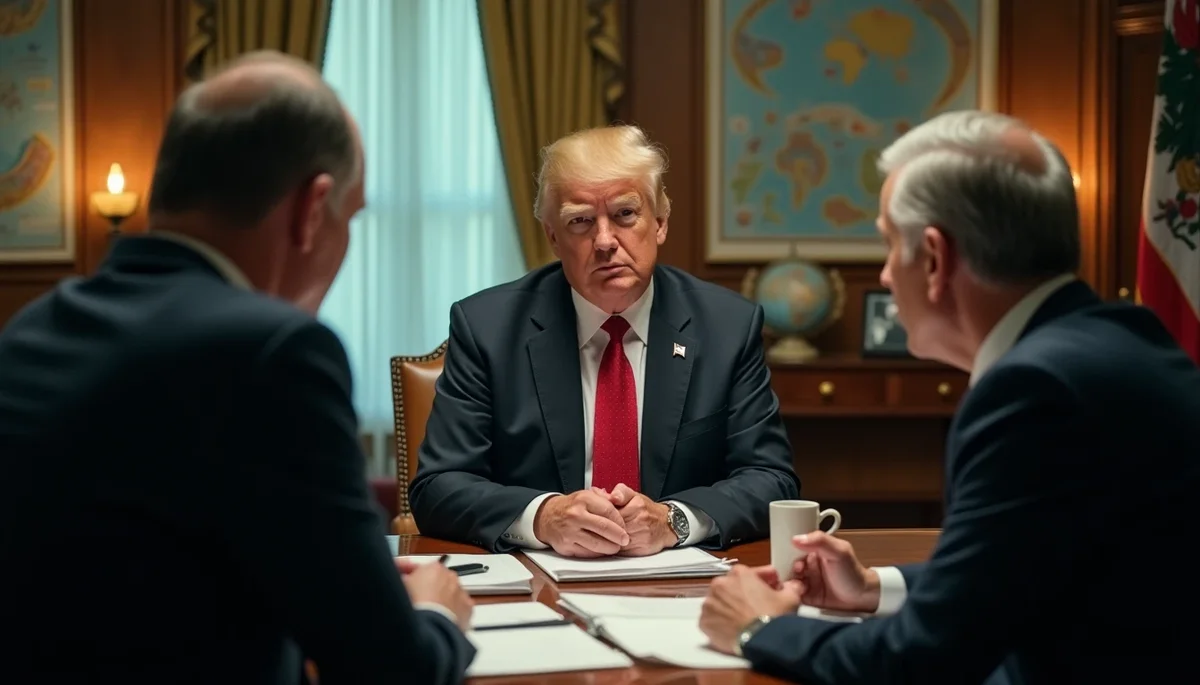
Nine days into Iran's most serious protests in years, the Islamic Republic finds itself caught between furious streets and an American president who has declared U.S. forces "locked and loaded." Intelligence reports now suggest Supreme Leader Ayatollah Ali Khamenei, 86, has prepared a contingency plan that would see him flee to Moscow with his family and inner circle should security forces fail to crush the expanding demonstrations. The revelation, emerging as food inflation and economic desperation drive Iranians into the streets of Tehran and beyond, marks a stunning acknowledgment of regime vulnerability at a moment when Iran's regional influence lies in ruins.
The protests have spread from the capital to cities across the country, fueled by the same economic grievances that sparked the 2019 and 2022 uprisings—but this time the regime faces them without its network of proxy forces. Hezbollah has been decimated in Lebanon, Hamas is under siege in Gaza, and the Assad regime that once provided strategic depth has collapsed entirely. President Trump's direct warning to Iranian leaders over their treatment of protesters, followed by U.S. special forces operations in the region, signals Washington's willingness to exploit this moment of maximum weakness. For faith communities who have watched Tehran persecute Christians, Baha'is, and religious minorities for decades, the question posed by analysts at The Christian Post resonates: could this unrest finally signal the end of an anti-Christian regime that has shaped Middle Eastern persecution for forty-five years?
The earth itself seems restless as these political tremors unfold. A magnitude 6.2 earthquake struck Japan's western Chugoku region Tuesday, rattling the area around the Shimane Nuclear Power Station, though operators report the facility continues normal operations. The Japan Meteorological Agency confirmed no tsunami danger, but a series of sizeable aftershocks kept residents on edge. Meanwhile, a 4.5 magnitude quake hit 34 kilometers northeast of Port Alsworth, Alaska, prompting a tsunami warning that generated 89 felt reports. Smaller tremors were recorded from California to Ohio to Mauritius, a reminder of the seismic activity that Scripture describes as characteristic of consequential times—"earthquakes in various places" serving as what Jesus called "the beginning of birth pains."
In the broader Middle East, Israel's strategic posture continues expanding. Israeli military vehicles entered the village of Saida al-Golan in Syria's Quneitra countryside Tuesday, even as Israeli and Syrian officials prepared to meet with Trump envoy Steve Witkoff in Paris to discuss a potential security accord. The Syrian delegation, according to state news agency SANA, seeks a full Israeli withdrawal from positions held since December 2024—a negotiating stance that seems increasingly detached from realities on the ground. Prime Minister Benjamin Netanyahu, meanwhile, has declared the Rafah crossing will remain closed until Hamas returns the remains of St.-Sgt.-Maj. Ran Gvili, setting conditions that could further isolate Gaza's population while keeping pressure on the militant group.
The financial architecture supporting these geopolitical shifts reveals its own patterns. Cryptocurrency exchanges Gemini and Crypto.com have poured over $21 million into the MAGA Inc. Super PAC ahead of the 2026 midterms, with Foris Dax contributing two separate $10 million payments. The digital currency industry's political investments come as traditional banking systems increasingly refuse to process humanitarian aid to Gaza, pushing some donors toward crypto alternatives—an ironic convergence where the same technology funds American political campaigns and circumvents financial restrictions on conflict zones.
What emerges from this day's developments is a picture of systems under stress—political, geological, financial. Iran's potential collapse would reshape not only Middle Eastern security but the experience of millions of believers who have worshipped underground for decades. The earthquakes from Japan to Alaska remind us that the physical world remains unpredictable despite our technological confidence. And the flow of digital money into political power centers suggests new forms of influence are being forged even as old orders crumble. For those watching with discerning eyes, January 6, 2026 offers a snapshot of a world in transition—where the powerful prepare escape routes to Moscow, the earth shakes beneath nuclear facilities, and the future is being purchased in stablecoins.