
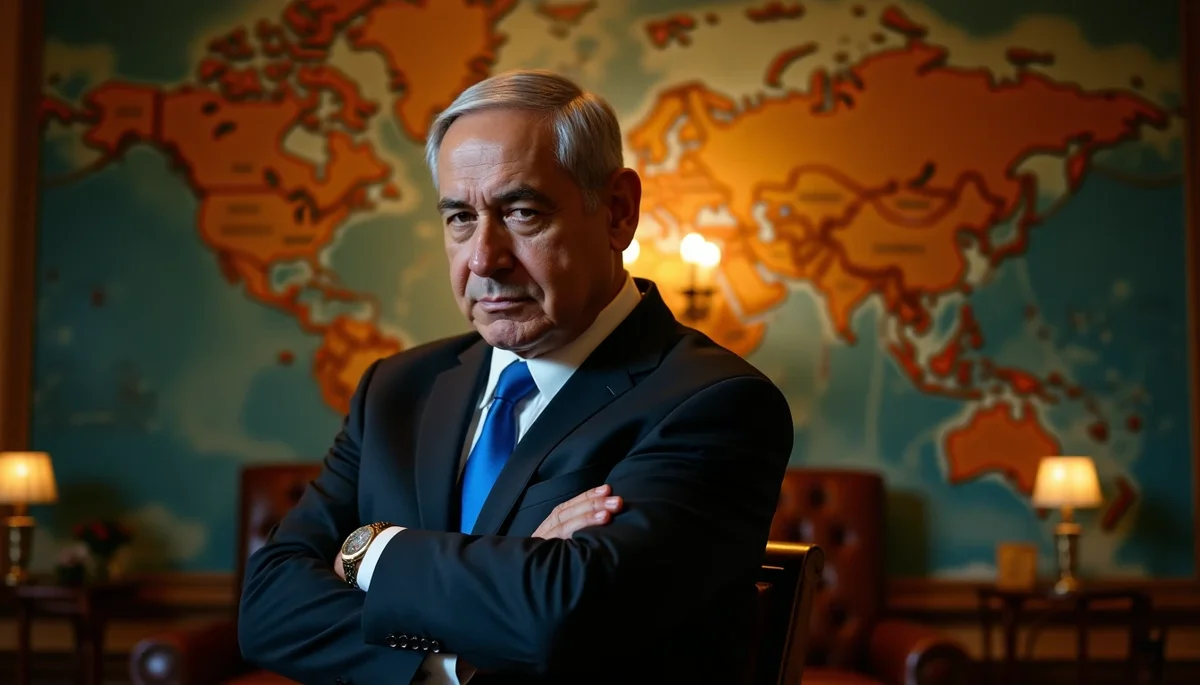
Prime Minister Benjamin Netanyahu departs for Florida this Sunday morning, carrying with him what Israeli officials describe as a consequential agenda for his sixth meeting with President Donald Trump since the latter's return to office. Gaza reconstruction, Iran's military advancements, and the delicate question of Hamas disarmament top the discussion points—yet the timing coincides with a remarkable archaeological moment that speaks to the very foundations of the conflict itself.
Deep beneath Jerusalem's Western Wall, where Herodian stones have stood for two millennia, an unlikely pair walked through history this week. Mosab Hassan Yousef—the son of Hamas co-founder Hassan Yousef who famously defected to work with Israeli intelligence—joined Knesset Member Ohad Tal in examining archaeological evidence that has long been contested in the political arena. Thirty feet underground, 2,000-year-old ritual baths still hold water, bearing silent witness to Jewish sovereignty in the city that remains the epicenter of regional tensions. The prophet Zechariah wrote of Jerusalem becoming 'a cup of trembling unto all the people round about,' and today's headlines suggest that ancient observation remains remarkably current.
The Arab League convened in emergency session Sunday at Somalia's request, responding to Israel's unprecedented recognition of Somaliland—making the Jewish state the first UN member to formally acknowledge the self-proclaimed republic that seceded from Greater Somalia in 1991. The move carries strategic weight beyond diplomatic symbolism. Somaliland's geographic position near Houthi-controlled Yemen, combined with reports of discussions regarding population transfer from Gaza, has injected new complexity into Horn of Africa dynamics. Turkey, Egypt, Iran, Jordan, Libya, and Saudi Arabia all participated in the emergency deliberations, underscoring how a seemingly distant recognition has rippled across the Islamic world.
Meanwhile, the earth itself continues to shake. A magnitude 4.6 earthquake struck 97 kilometers north of Yakutat, Alaska on Sunday, prompting tsunami warnings along the Pacific coast. Peru experienced a stronger magnitude 6.2 tremor west of Puerto Santa, though alert levels remained green. These seismic events arrive as Hezbollah chief Naim Qassem declared that disarming his organization is not 'in Lebanon's interest,' accusing Israel of failing to honor ceasefire terms even as the Lebanese military faces pressure to complete Hezbollah's removal from southern border areas by late January.
In the financial realm, cryptocurrency markets reflect broader uncertainty. Bitcoin investors are increasingly selling at losses, with daily realized losses reaching $300 million as the leading digital asset trades well below recent highs. Yet Cardano co-founder Charles Hoskinson projects Bitcoin could reach $250,000 by 2026, suggesting the current pause may precede significant capital rotation into alternative digital assets. The $150 billion in forced liquidations across crypto derivatives markets in 2025 speaks to the volatility that has characterized this transitional year.
Iranian President Masoud Pezeshkian's declaration that Israel, the United States, and Europe are already waging 'full-fledged war' against Iran adds urgency to Netanyahu's Mar-a-Lago visit. Israeli officials anticipate friction over Turkey's proposed role in Gaza governance and the sequencing of reconstruction efforts before Hamas has fully disarmed. The fate of deceased hostage Ran Gvili's remains also weighs heavily—reports indicate Israeli forces conducted a covert operation in Hamas-controlled Gaza City, extracting a Palestinian Islamic Jihad operative near Palestine Square in pursuit of information.
As 2025 draws to its close, the convergence of archaeological validation, diplomatic realignment, and regional instability presents a picture familiar to students of Scripture. The psalmist's words echo across centuries: 'Pray for the peace of Jerusalem.' Those watching these developments would do well to note that the ancient city's contested status remains not merely a political question, but one that touches the deepest currents of prophetic expectation. What emerges from the Netanyahu-Trump discussions may well shape the trajectory of the new year.