
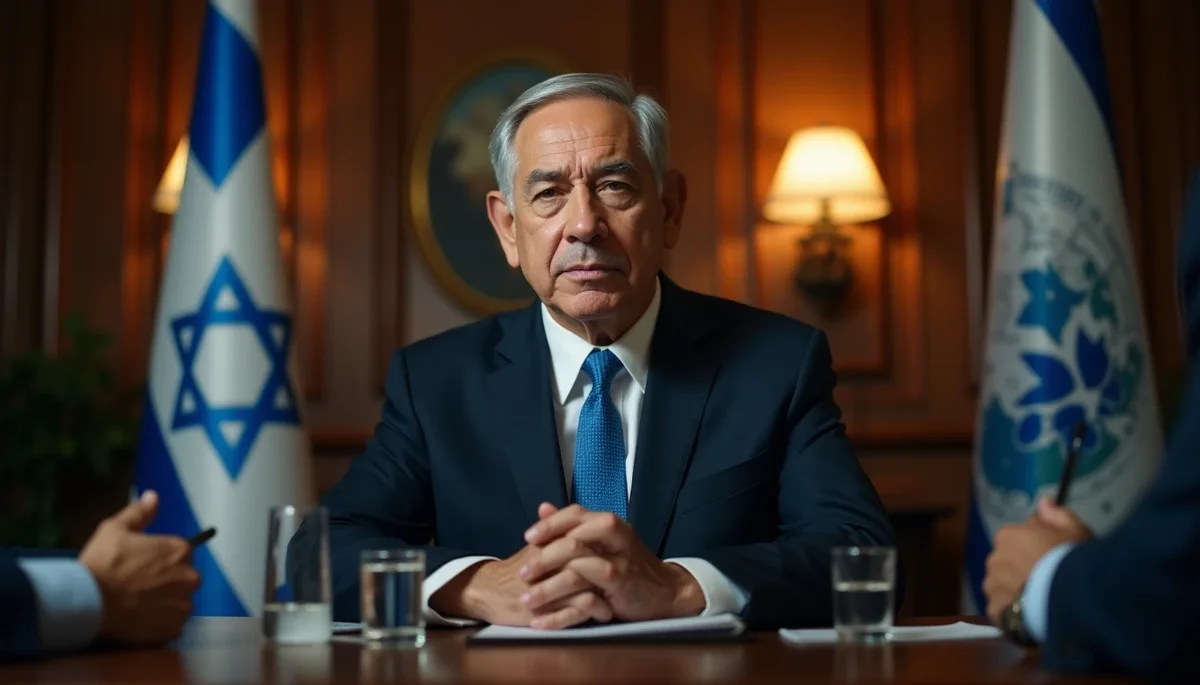
In a striking signal of shifting geopolitical calculations, Prime Minister Benjamin Netanyahu has indicated Israel may phase out American military aid—a development that would fundamentally reshape the strategic landscape of the Middle East. Speaking to The Economist this week, Netanyahu outlined a vision for securing Israel's future that includes reassessing the decades-long dependency on Washington, confronting the Iranian threat head-on, and restoring Israel's global standing through what he termed fighting 'propaganda.'
The timing proves significant. As Netanyahu met with President Trump at Mar-a-Lago in late December, the agenda centered on Tehran's attempts to rebuild its nuclear program and missile capabilities, the ongoing situation in Gaza, and planning for a post-Hamas future. Yet the subtext of these discussions points toward something more fundamental: Israel positioning itself for greater autonomy at precisely the moment when regional dynamics appear most volatile. The prophet Zechariah spoke of Jerusalem becoming 'a cup of trembling unto all the people round about'—and indeed, the burden of that ancient city weighs heavily on every calculation made in both Washington and Jerusalem today.
Meanwhile, the earth itself seems restless. A magnitude 5.5 earthquake struck the Mauritius-Reunion region early Friday, while a 5.1 magnitude tremor shook southern Italy near Brancaleone, with residents reporting the shaking across the Calabrian coast. Russia's Kuril Islands recorded a 4.7 magnitude event, continuing a pattern of seismic activity that has kept global monitoring systems active. The USGS reports over 660 earthquakes worldwide in the past twenty-four hours alone, including seven above magnitude 5.0. While geologists note such activity falls within normal parameters, those who study prophetic literature cannot help but recall the Lord's words in Matthew 24 regarding 'earthquakes in divers places' as birth pangs of a coming age.
Perhaps most remarkable is the spiritual transformation unfolding within Israel itself. Since the October 7th attacks, a wave of religious revival has swept through segments of Israeli society that previously identified as secular. Young women have posted videos cutting up immodest clothing as acts of repentance; tefillin pop-up stations have appeared in Tel Aviv; pop stars have publicly embraced observance. One viral video captured a young influencer declaring as she sheared her wardrobe, 'Creator of the world, as I cut these clothes, cut away the harsh decrees against Israel.' This return to faith amid national trauma echoes patterns throughout Jewish history—the turning of hearts in times of distress that the prophets repeatedly foretold.
In the financial realm, the infrastructure of tomorrow's economy continues taking shape. BNY Mellon, America's oldest bank, has launched tokenized deposit capabilities for institutional clients, operating on a private blockchain that converts traditional deposits into digital tokens. This development, while technical, represents another step toward the digitization of value transfer that many observers believe will characterize end-times commerce. Simultaneously, Tether minted another billion USDT on the Tron network this week, bringing total stablecoin creation by major issuers to $3.75 billion in just days—a staggering flow of digital liquidity that operates largely outside traditional banking oversight.
The situation in Lebanon adds another dimension to regional complexity. Beirut has approved a new exploration permit for a Total-led consortium to begin offshore gas development in waters bordering Israel's maritime boundary. Energy resources in the eastern Mediterranean have long represented both opportunity and flashpoint; this approval comes as Lebanon attempts economic recovery while navigating the aftermath of Hezbollah's diminished influence.
China's persecution of believers intensified this week as well, with fresh arrests targeting unregistered churches. The Luke Alliance described the CCP's message as unmistakable: 'Obedience to God will be punished.' For the global church, these developments serve as sobering reminders that the freedom to worship remains contested ground in much of the world.
As we survey this landscape—Israel seeking independence, the earth groaning, faith reviving amid trauma, digital financial systems expanding, and persecution continuing—the discerning observer recognizes familiar patterns. The convergence of geopolitical realignment, technological transformation, and spiritual awakening suggests we occupy a moment of unusual significance. Watch Lebanon's energy developments, monitor Israel's aid negotiations with Washington, and pay attention to the quiet digitization of money. The hour grows late, and those with eyes to see would do well to remain vigilant.