
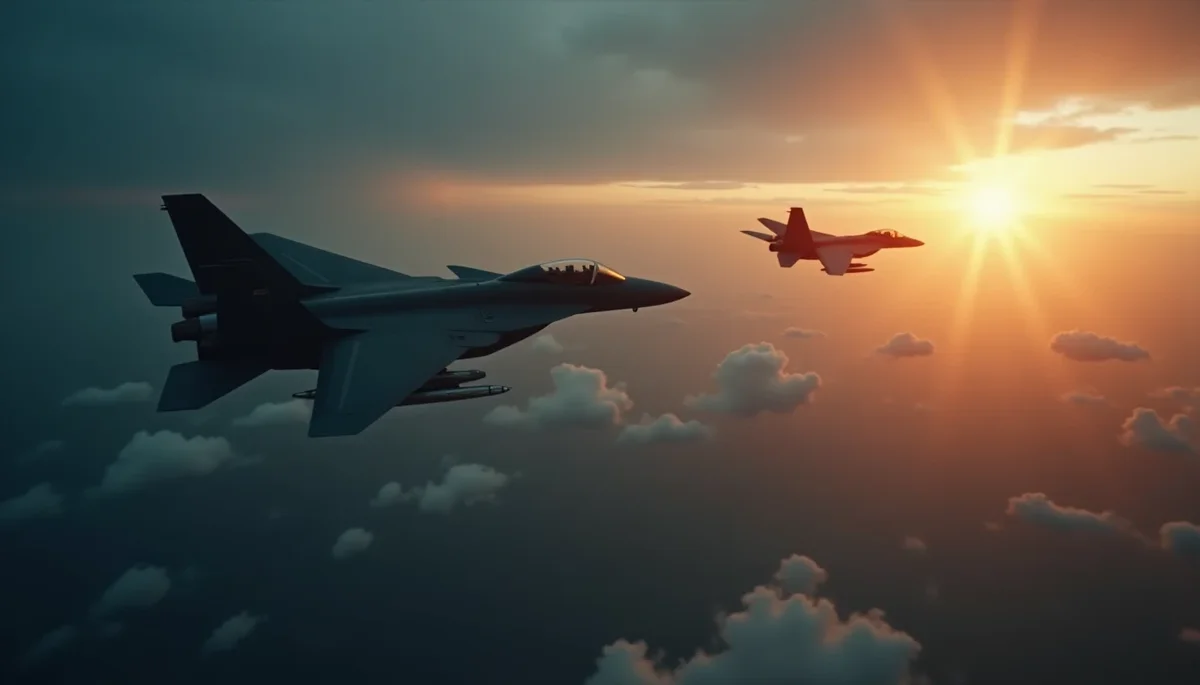
The earth trembles and nations rage—a fitting summary for this December weekend as developments across multiple fronts remind us that we live in consequential times. NATO fighter jets scrambled into the midnight sky over Poland early Saturday as Russia unleashed what observers describe as one of its most intensive drone and missile barrages against Ukraine in recent months. The alliance's rapid response, activating air defense systems along its eastern flank, underscores how close the European theater has moved toward direct confrontation. For those who study prophetic Scripture, the alignment of nations and the escalating nature of these conflicts echo the warnings found throughout the prophetic literature—though wisdom cautions us against hasty declarations.
Meanwhile, the earth itself delivered a stark reminder of creation's groaning. A powerful magnitude 7.0 earthquake struck near Alaska's Hubbard Glacier on Saturday, sending tremors across the continent as far as Canada. The United States Geological Survey recorded the quake at a depth of approximately 6.2 miles, with over 500 felt reports submitted within hours. A tsunami warning was briefly issued before being downgraded, though a series of significant aftershocks—ranging from magnitude 4.1 to 4.6—continued rattling the sparsely populated Yakutat region throughout the day. The small community of fewer than 700 residents now assesses damage while scientists monitor for additional seismic activity. Jesus spoke of earthquakes in various places as characteristic of the age preceding His return, and while individual events require measured interpretation, the increasing frequency of significant seismic events worldwide merits our attention.
In Jerusalem, German Chancellor Friedrich Merz arrived Saturday evening for his first official visit since taking office in May, landing at Ben Gurion Airport amid what can only be described as strained relations between the two historically close allies. Israel's ongoing military operations in Gaza have tested Germany's unwavering post-Holocaust commitment to Israeli security against growing international pressure. Merz met with President Isaac Herzog Saturday night, with discussions centering on the fate of the final hostage still held in Gaza and potential Arrow 3 missile defense cooperation. The Chancellor is scheduled to meet Prime Minister Benjamin Netanyahu Sunday morning before visiting Yad Vashem Holocaust Memorial—a symbolic itinerary that speaks to Germany's attempt to balance historical obligation with present diplomatic realities.
The Gaza situation itself remains deeply volatile. Egypt's Foreign Minister Badr Abdelatty accused Israel of ceasefire violations Saturday, urgently calling for the deployment of international monitors under President Trump's proposed Gaza plan. Qatar and Egypt jointly called for the immediate withdrawal of Israeli troops and the establishment of an international military force. Turkish Foreign Minister Hakan Fidan added another dimension, claiming Hamas stands ready to hand over governance of Gaza if a Palestinian-led police force can be established—a development that, if accurate, could significantly reshape the diplomatic landscape. Thousands of Israelis, meanwhile, took to the streets Saturday evening demanding a state commission of inquiry into the failures of October 7, as weekly protests at Hostage Square wind down with only one deceased hostage remaining unaccounted for in Gaza.
Adding to the geopolitical complexity, a UN Security Council delegation traveled to Lebanon urging both Israel and Hezbollah to maintain compliance with the 2024 ceasefire agreement, while backing Lebanon's plan to disarm the Iranian-backed militia. The interconnected nature of these conflicts—from Ukraine to the Levant—reflects what students of biblical prophecy have long anticipated: a convergence of tensions involving the nations specifically named in ancient texts. The prophet Ezekiel spoke of a time when Gog and its allies would move against Israel, while Daniel foresaw a period of unprecedented trouble for the nations.
As we close this Lord's Day, the watchman's task remains clear: observe with discernment, report with accuracy, and interpret with humility. The scrambling of jets over Poland, the shaking of Alaskan ground, and the diplomatic maneuvering in Jerusalem all warrant our prayerful attention. Whether these represent the birth pangs our Lord described or simply the turbulence common to a fallen world, the faithful response remains the same—vigilance tempered by hope, and watchfulness anchored in the certainty that history moves toward its appointed conclusion.