
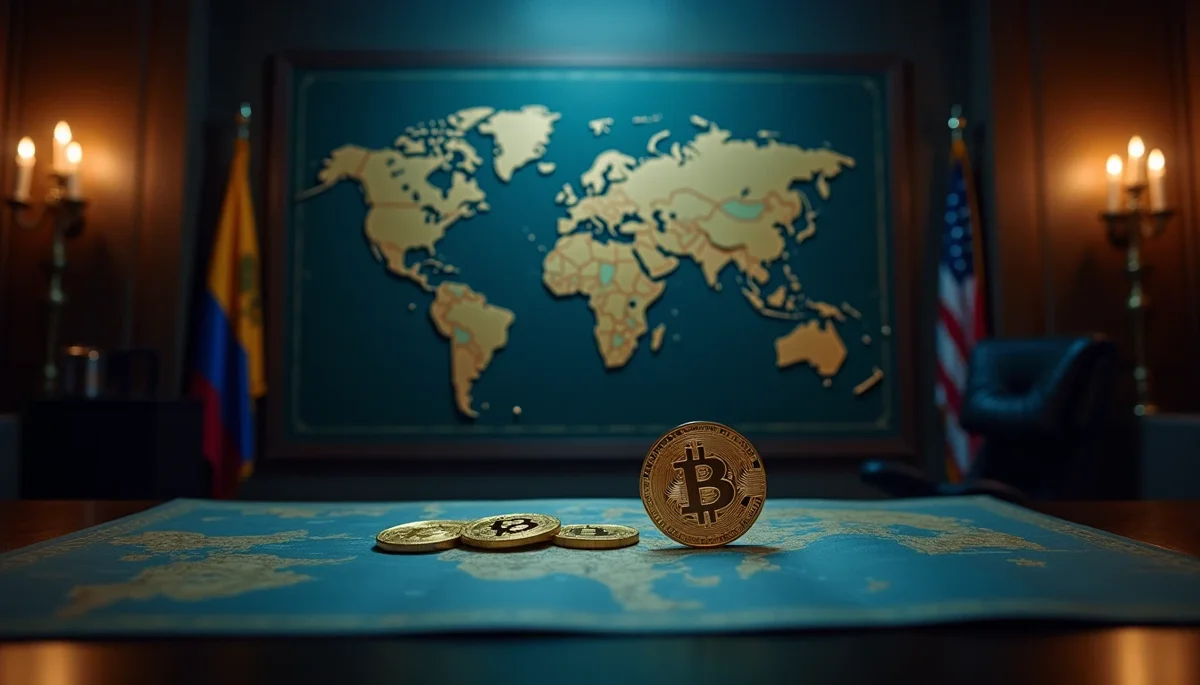
In the predawn hours of Saturday morning, American special operations forces executed what the White House calls 'Operation Absolute Resolve,' capturing Venezuelan President Nicolás Maduro and his wife Cilia Flores in a lightning raid that rendered the South American nation's military 'powerless.' The dictator now sits in U.S. custody, facing narcoterrorism charges in the Southern District of New York—a dramatic culmination of months of escalating pressure that analysts say will reverberate across the Western Hemisphere for years to come.
President Trump announced the operation in characteristically blunt terms, declaring that Maduro 'effed around and found out' and that American forces will 'run Venezuela' until a safe democratic transition can be achieved. The raid, conducted without reported U.S. casualties, marks the most significant American military intervention in Latin America in decades. Geopolitical analyst Andrew Korybko writes that the operation's 'astounding success' will likely 'coerce the rest of the hemisphere into strategically capitulating to the US'—a sobering assessment for those watching the rapid consolidation of American power projection capabilities.
The Venezuela operation unfolds against a backdrop of persistent Middle Eastern tensions. In Gaza, the IDF struck a Hamas rocket launcher that military officials say was 'ready to be launched' at Israel—a direct violation of the current ceasefire agreement. The launcher, positioned in northern Gaza and aimed at the Israeli town of Sderot, was destroyed before it could be used. Meanwhile, right-wing activists clashed with anti-government protesters at Tel Aviv's Habima Square, and former Supreme Court President Aharon Barak addressed demonstrators at the weekly gathering. The fragile regional equilibrium continues to test the patience of all parties.
Yet perhaps the most quietly significant development of the new year involves neither missiles nor military operations. Bitcoin closed 2025 with daily volatility hitting an all-time low of 2.24%—making the cryptocurrency, remarkably, less volatile than tech giant Nvidia's stock. The transformation is structural, not superficial: ETFs, corporate treasury adoption, and long-term holder redistribution absorbed $570 billion in market swings throughout what traders are calling a 'boring' year. This maturation represents something profound—an asset class that once served as the Wild West of speculation now exhibits the trading characteristics of established financial instruments.
Cathie Wood's ARK Blockchain & Fintech Innovation ETF captured this shift, posting a 29% gain in 2025 by expanding its definition of fintech to include AI plays like Palantir, which surged 135%. The fund's success illustrates a broader truth: the boundaries between traditional finance, cryptocurrency, and artificial intelligence are dissolving faster than regulatory frameworks can adapt. Anthropic's president Daniela Amodei reinforced this point, warning Silicon Valley that 'bigger isn't always better' in the AI arms race—a message that applies equally to the capital flooding into crypto ventures, which saw funding surge 433% to $49.75 billion last year.
Domestically, the new year brought federal action to protect religious liberty for military service members, with Defense Secretary Pete Hegseth implementing new policies at the Pentagon. The move signals the administration's continued prioritization of conscience protections—a theme that resonates with communities of faith watching the rapid cultural and technological changes reshaping society.
The ancient prophet Daniel spoke of a time when 'many shall run to and fro, and knowledge shall increase.' The speed at which empires can now project force, currencies can mature, and artificial intelligence can reshape industries would have been unimaginable even a decade ago. As 2026 opens with a captured dictator, stabilizing digital assets, and accelerating technological convergence, the watchful observer notes how quickly the board is being reset. The question is no longer whether fundamental change is coming—it's whether we can discern its shape before it arrives.