
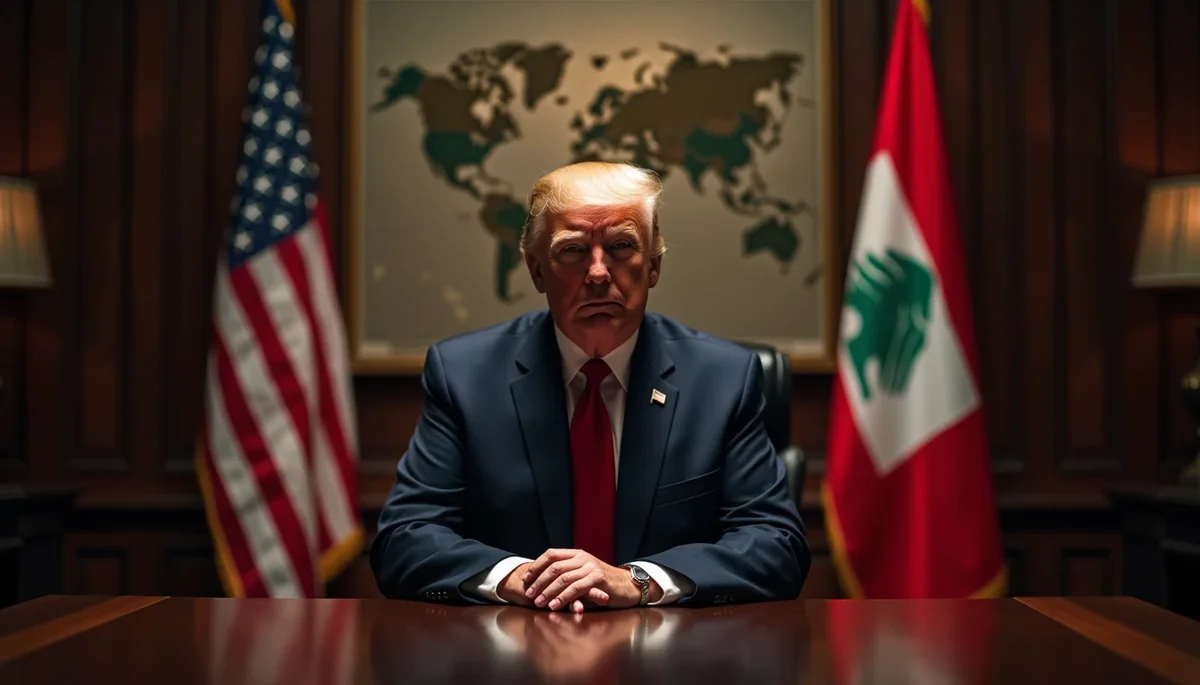
The Lebanese Armed Forces announced Thursday what may prove to be a watershed moment in the country's fraught relationship with Hezbollah—a declaration that the state has achieved an 'effective and tangible' monopoly on weapons in southern Lebanon. Army Commander General Joseph Aoun is expected to brief the government on the progress of the disarmament mission, which comes after months of Israeli threats to expand military operations if Lebanon failed to neutralize Hezbollah's military infrastructure along the border.
The announcement, while significant, carries important caveats. Lebanese military officials acknowledged that substantial work remains to clear unexploded ordnance and dismantle the extensive tunnel networks that Hezbollah constructed over decades. The army had set a self-imposed year-end deadline for the first phase of operations, taking international diplomats on carefully orchestrated tours to demonstrate progress. Sources in the region indicate that Israel has sent quiet reassurances to Tehran signaling no intent to escalate, though Iranian officials have reportedly dismissed these overtures as untrustworthy.
The Lebanese development unfolds against a backdrop of dramatic American retrenchment from the international stage. President Donald Trump signed a sweeping presidential memorandum Wednesday directing the United States to withdraw from 66 global bodies, declaring an end to what he termed 'wasteful globalism.' The move represents the most aggressive assertion of American sovereignty in modern diplomatic history, effectively dismantling decades of multilateral engagement in a single stroke. The withdrawal encompasses organizations spanning climate, trade, and security cooperation—a reconfiguration that diplomats across multiple capitals are still working to comprehend.
Meanwhile, the Trump administration is simultaneously pressing forward on Gaza negotiations, informing Prime Minister Benjamin Netanyahu that it remains committed to advancing phase two of ceasefire talks without preconditions. Israel, however, continues to insist on Hamas disarmament and the return of hostages before any permanent arrangement. The death of Uri Lupolianski, former Jerusalem mayor and founder of the Yad Sarah humanitarian organization, at age 74 this week serves as a poignant reminder of the human dimensions underlying these geopolitical calculations. Lupolianski, the first Haredi politician elected to lead Jerusalem, built an organization that transcended political divisions to serve over 800,000 people annually with medical equipment and services.
On the economic front, the cryptocurrency industry is mounting a unified push for Congress to pass the Clarity Act, federal market-structure legislation that has divided Washington. Firms like Ripple are betting heavily on a Senate deal that sources indicate is rapidly unraveling behind closed doors. U.S. banks have characterized the legislation as an 'extinction-level event' threatening a $360 billion revenue monopoly. Simultaneously, Stripe announced an expansion of crypto offerings through a partnership with Crypto.com, while Morgan Stanley's newly filed Bitcoin ETF is generating substantial institutional interest—analysts at ProCap suggest the move carries strategic value regardless of immediate inflows.
The Trump administration's seizure of Venezuelan oil tankers and a Russian-flagged vessel this week signals Washington's willingness to use economic leverage aggressively, even as it withdraws from multilateral frameworks. Moscow and Washington have exchanged warnings over the seizures, adding another pressure point to an already strained relationship.
For students of biblical prophecy, the convergence of these developments warrants careful attention. The potential neutralization of Hezbollah's southern infrastructure, Israel's multi-front strategic posture, and America's dramatic pivot away from global institutions represent the kind of rapid realignment that can reshape the prophetic landscape overnight. The prophet Daniel spoke of a time when 'many shall run to and fro, and knowledge shall increase'—a description that captures the accelerating pace of change observers are witnessing across every domain. What remains to be seen is whether Lebanon's announced milestone represents genuine transformation or merely a tactical pause in a conflict that has defined the region for generations.