
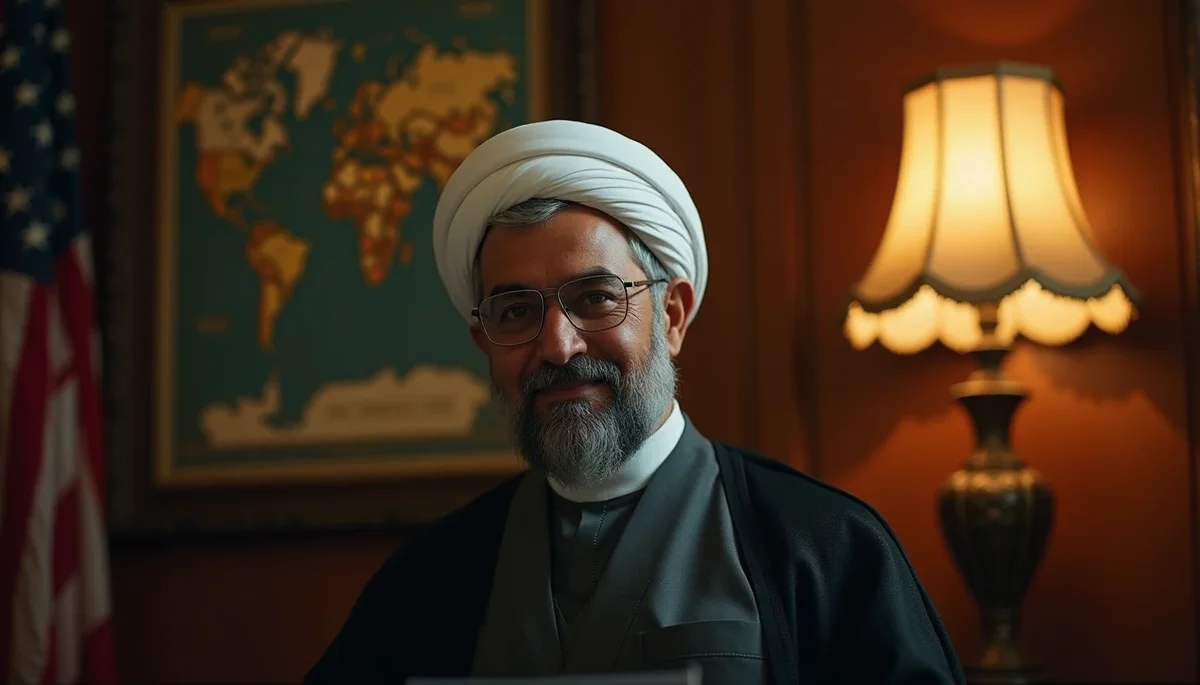
Iran's Supreme Leader Ayatollah Ali Khamenei addressed his nation Friday with a message that carried echoes of ancient Persian defiance—acknowledging protesters' economic grievances as 'just' while warning that 'rioters must be put in their place.' The carefully calibrated statement arrives as Tehran faces unprecedented pressure on multiple fronts: widespread domestic unrest, the sudden collapse of its Venezuelan ally, and escalating threats from Washington.
The timing proves remarkable. Just as Khamenei spoke, Israeli officials were privately celebrating what they view as a strategic masterstroke—the U.S. military operation that removed Venezuelan President Nicolás Maduro from power. For Jerusalem, the Caracas connection runs deeper than geography might suggest. Venezuela severed diplomatic ties with Israel in 2009 and subsequently became what Israeli intelligence describes as a 'suspected hub for Hezbollah' operations and Iranian Revolutionary Guard activity in the Western Hemisphere. The regime's fall represents, in Israeli strategic calculus, the dismantling of a critical node in Tehran's global network.
Yet even as one pillar of Iranian influence crumbles in South America, new complications emerge closer to home. Senior Israeli analyst Shay Gal has issued pointed warnings about the Trump administration's apparent openness to Turkish military involvement in Gaza—a development that has Jerusalem's security establishment deeply concerned. 'Is Turkey the new Iran?' Gal asked in a recent assessment, highlighting how Ankara's ambitions in the Palestinian territories could fundamentally reshape regional dynamics. The concern reflects an ancient pattern: great powers have always sought influence over the land bridge connecting three continents, and the current moment sees multiple actors positioning for advantage.
Meanwhile, Hamas continues tightening its grip on Gaza's civilian population, with Israeli security officials assessing that the organization is simultaneously rebuilding military capabilities while consolidating control over international aid distribution. The Berman brothers—Gali and Ziv—offered harrowing testimony this week about their more than two years in Hamas captivity, describing starvation, abuse, and transfers between multiple locations. Their account underscores the human dimension of a conflict that shows no signs of resolution.
The earth itself seems restless. Mexico continues recovery efforts following the January 2nd M6.5 earthquake that struck Guerrero and Mexico City, killing at least two and injuring seventeen. Over one thousand aftershocks have been recorded as relief teams survey damaged homes and landslides across the region. Global seismic monitors report elevated activity worldwide—four earthquakes magnitude 5.0 or greater in the past twenty-four hours alone, with tremors recorded from Taiwan to Alaska.
In the information sphere, the battle over narrative control intensifies. A detailed analysis published this week examines what its author terms 'The Misinformation Inquisition'—the systematic deployment of censorship mechanisms to shield approved narratives from scrutiny, with COVID-19 policies cited as a prime example. The piece argues that institutional gatekeepers increasingly function as modern inquisitors, determining which questions may be asked and which must remain forbidden.
For students of biblical prophecy, the convergence of these developments carries particular weight. The prophet Ezekiel spoke of a time when Persia—modern Iran—would find itself aligned against Israel in a coalition that scholars have long debated. What we witness today suggests the preliminary positioning of powers described in ancient texts. Tehran's defiance, Turkey's ambitions in Gaza, the realignment of hemispheric alliances, the shaking of the earth—these are not isolated phenomena but interconnected threads in a larger tapestry.
The week ahead bears watching. Khamenei's acknowledgment of legitimate grievances while threatening crackdowns suggests a regime uncertain of its footing. Israeli officials will monitor whether Venezuela's fall triggers cascading effects elsewhere in Iran's network. And in Gaza, the question of who ultimately controls the territory—Hamas, Israel, Turkey, or some international force—remains dangerously unresolved. The ancient crossroads of civilization once again demands the world's attention.