
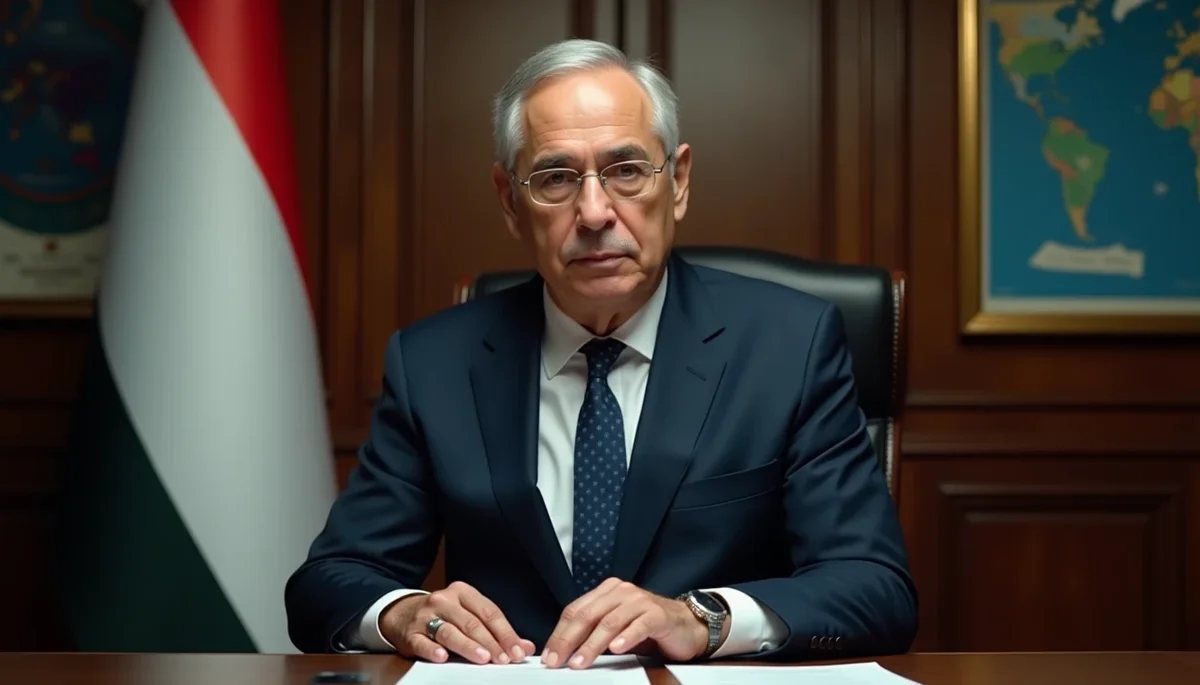
Israeli Defense Minister Israel Katz delivered an unequivocal message on Christmas Day: Israel will never withdraw from Gaza. Speaking at the Bnei Akiva Yeshivot and Makor Rishon's National Education Conference in Jerusalem, Katz outlined a vision that includes permanent military presence, expanded buffer zones, and what he described as 'de facto' annexation policies in the West Bank.
"A large area of Gaza will be surrounded to protect settlements," Katz declared, doubling down on rhetoric that has drawn sharp criticism from the United States. The defense minister's comments come despite the ongoing ceasefire agreement with Hamas, which he claims represents an Israeli victory. "If Hamas does not disarm as part of US President Donald Trump's plan, we will do it," Katz warned. His statements signal a dramatic hardening of Israeli policy that could reshape the entire region's political landscape.
The announcement arrives as Pope Leo XIV, presiding over his first Christmas as pontiff, called for courage and direct dialogue between Russia and Ukraine while condemning the "senselessness" of war. The American-born pope specifically addressed the dire humanitarian situation in Gaza, where the Holy Family Church in Gaza City lit its Christmas tree for the first time in two years. Worshippers packed the main prayer hall—not merely celebrating the holiday, but grateful to be alive after 14 months of devastating conflict.
Meanwhile, the earth itself appears restless. Global seismic monitoring recorded 574 earthquakes in the past 24 hours, including one magnitude 6.0 event and seven measuring 5.0 or greater. Russia's far eastern territories experienced multiple tremors, with a 4.9 magnitude quake striking 107 kilometers east-southeast of Shikotan and a 4.5 magnitude event hitting near Vilyuchinsk. Seismic activity stretched from Alaska to the Caribbean, from California to the South Pacific near Fiji.
In Turkey's southeastern Antakya—the ancient biblical city of Antioch where believers were first called Christians—a scattered remnant gathered at Saint Peter's rock church for Christmas Eve mass. "Since the earthquake, our community has scattered," worshipper Mari Ibri told reporters, referencing the devastating 2023 tremors that killed over 50,000. "Those who remain are trying to regroup." The scene carries particular weight for students of Scripture; Antioch served as the launching point for Paul's missionary journeys and the early church's expansion into the Gentile world.
Adding to regional complexity, western intelligence sources tell the Jerusalem Post that Turkey is attempting to deploy radar systems within Syrian territory—a move that would significantly impair Israel's ability to strike targets in Iran by compromising Israeli use of Syrian airspace. The development underscores how Syria's post-Assad landscape remains contested ground, with multiple powers jockeying for strategic advantage.
Solar activity adds another layer of uncertainty to an already volatile moment. Sunspot region AR4321 has rapidly developed a beta-gamma-delta magnetic configuration—the most complex classification associated with energetic eruptions. Space weather forecasters are monitoring whether this could produce an X-class flare, the most powerful category, potentially disrupting communications and power grids.
For those watching prophetic patterns, the convergence is striking: the land promised to Abraham faces permanent occupation declarations, ancient Christian communities struggle to survive amid ruins, the nations remain at war, and creation itself groans with seismic and solar upheaval. As Katz's settlement rhetoric collides with international criticism and Pope Leo's calls for peace, the gap between diplomatic language and ground-level reality grows ever wider. Watch for Washington's response to Israel's annexation language and whether Turkey's Syrian radar gambit triggers Israeli countermeasures.