
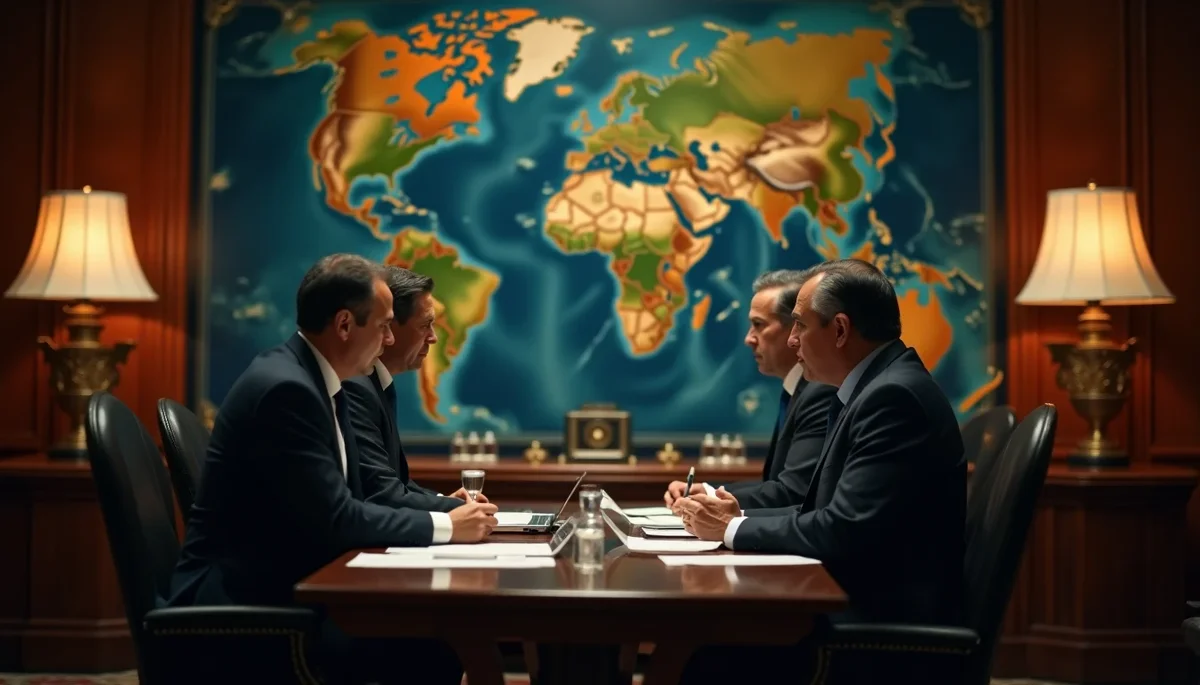
U.S. special operations forces executed a covert maritime interdiction in the Indian Ocean last month, boarding a vessel transporting military-related components from China to Iran, according to officials speaking to the Wall Street Journal. The seized cargo reportedly contained articles potentially useful for Iran's conventional weapons programs, marking a significant escalation in American efforts to disrupt Tehran's military supply chains. The operation, conducted without fanfare until now, underscores the shadow war playing out across international waters as regional tensions continue to simmer.
The raid comes as Iran simultaneously detains 18 crew members from a foreign tanker seized in the Gulf of Oman, demonstrating Tehran's willingness to assert dominance over critical maritime chokepoints. These parallel developments reveal a Persian Gulf theater increasingly defined by interdiction operations and strategic confrontation, with China's role as a weapons supplier to Iran drawing renewed scrutiny from Western intelligence services.
Meanwhile, the Pacific Rim continues to shake. Japan recorded a powerful magnitude 6.7 aftershock off the coast of Honshu on December 12, following Monday's devastating 7.6 earthquake that injured at least 20 people and forced the evacuation of 900,000 residents from tsunami-vulnerable zones. Japanese officials had warned of an increased risk of a magnitude-8 or larger quake, and seismologists remain on high alert. The global earthquake report for Saturday tallies 692 seismic events in the past 24 hours, including 3 quakes above magnitude 5 and 41 above magnitude 4—a sobering reminder of the planet's restless foundations.
Across the Pacific, the American West Coast braces for another atmospheric river forecast to make landfall Sunday. Washington state is still reeling from historic flooding earlier this week that prompted emergency declarations, mass evacuations, and record river levels. The pattern of extreme weather events battering North America's western seaboard shows no sign of relenting, with meteorologists warning of prolonged precipitation through the coming days.
In Rome, Italian Prime Minister Giorgia Meloni navigated delicate diplomatic waters, hosting former Hamas hostage Rom Braslavski at the Palazzo Chigi before meeting with Palestinian Authority Chairman Mahmoud Abbas to discuss Gaza ceasefire prospects and the two-state solution. Braslavski, released from Gaza captivity, recounted Hamas atrocities during an appearance at a ruling party event, urging global recognition of the October 7 trauma. The juxtaposition of these meetings—a freed Israeli hostage and the Palestinian leader—captures the impossible tensions Italy and other mediators must navigate.
The decentralized finance sector finds itself embroiled in regulatory warfare as crypto advocacy groups including Andreessen Horowitz and the Uniswap Foundation push back against Citadel Securities' request that the SEC impose stricter oversight on DeFi platforms dealing in tokenized stocks. The DeFi Education Fund has led the rebuttal, dismissing Citadel's stance as fundamentally flawed. Separately, UK lawmakers sent a letter to Chancellor Rachel Reeves opposing the Bank of England's proposed cap on stablecoin holdings, arguing such restrictions would undermine Britain's ambitions to become a global crypto hub.
For those watching through a prophetic lens, the convergence of maritime confrontation near ancient Persia, the shaking of nations along the Pacific Ring of Fire, and the relentless pursuit of financial systems beyond traditional control presents a familiar pattern. The prophet Haggai spoke of a time when God would 'shake the heavens and the earth, the sea and the dry land'—words that resonate as both geological and geopolitical tremors intensify simultaneously.
The week ahead demands attention to Japan's seismic activity, the Pacific Northwest's weather emergency, and whether the Indian Ocean interdiction signals a new phase in the shadow war against Iranian rearmament. The ground beneath our feet—and the waters around us—remain anything but stable.