
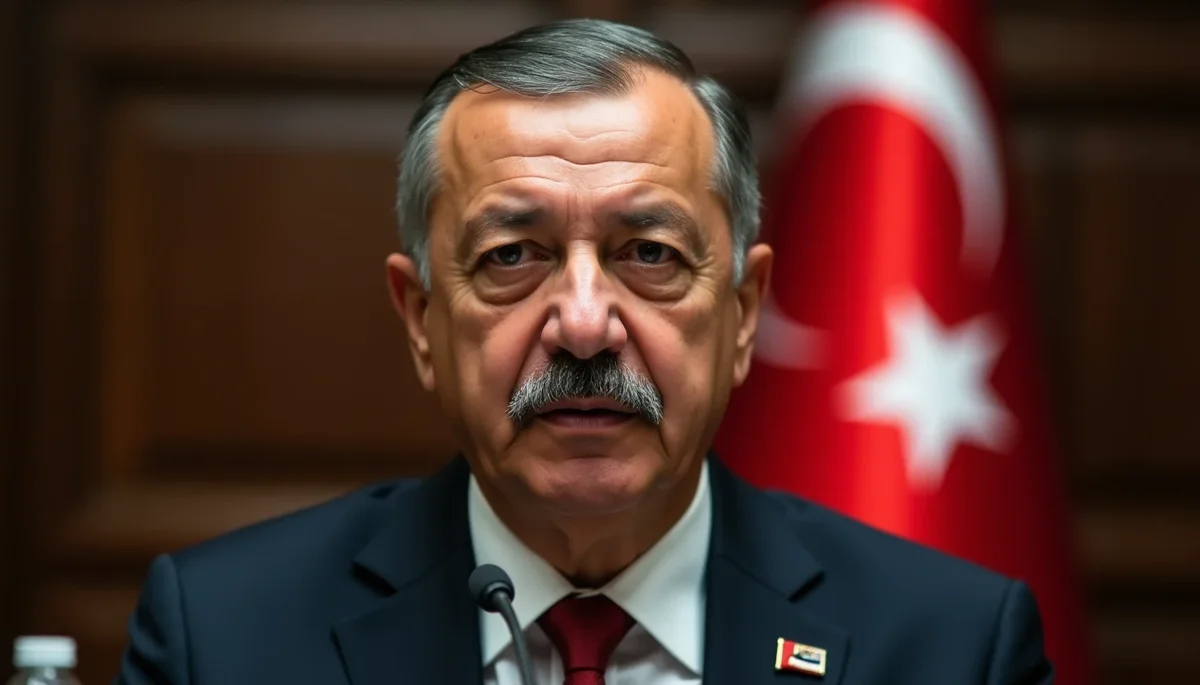
Turkish President Recep Tayyip Erdoğan issued sharp warnings against Israel Monday as Prime Minister Benjamin Netanyahu hosted the leaders of Greece and Cyprus for their tenth trilateral summit in Jerusalem—the first such gathering since the October 7, 2023 massacre. The convergence of Mediterranean allies comes as regional tensions escalate on multiple fronts, with Netanyahu delivering a pointed message to Tehran about its missile rebuilding efforts.
Erdoğan declared Turkey would not tolerate 'violations of its rights' as the three Mediterranean nations discussed energy cooperation and regional security. The timing proves significant: Egypt and Turkey are moving in lockstep as their coordination accelerates amid growing friction with both Washington and Jerusalem. Turkish Foreign Minister Hakan Fidan met recently with Egyptian counterpart Badr Abdelatty in Ankara, signaling a realignment that could reshape regional dynamics heading into 2026.
Meanwhile, a special defense report warns Jerusalem faces the danger of an October 7-style invasion due to failed border security—a sobering assessment as the city simultaneously hosts Christmas celebrations returning after two years of war. The contrast is stark: pilgrims gathering in the ancient streets while security analysts warn of existential vulnerabilities.
Defense Minister Israel Katz sparked controversy Tuesday when he announced plans to establish IDF-based communities in northern Gaza, declaring the military would not withdraw 'one millimeter.' Within hours, under apparent U.S. pressure, Katz walked back the statements, with the government clarifying it has no intention of establishing settlements in the enclave. The rapid reversal underscores the delicate balance Netanyahu must strike ahead of his White House meeting with President Trump later this month—the two nations hold diverging interests on Gaza, Lebanon, Syria, Iran, and Turkey.
In southern Lebanon, the environmental toll of conflict becomes increasingly visible. Israel's military operations have devastated Harj al-Raheb—the Monk Forest—a 16-hectare woodland on the border near Ayta ash-Shaab. From white phosphorus to bulldozers, the destruction represents what observers call ecocide against one of the last natural refuges in the zone. Lebanon's government denied any army links to Hezbollah after an Israeli strike near Sidon killed three operatives the IDF says were rebuilding terror infrastructure.
Christians across the Holy Land mark a subdued Christmas season. In Bethlehem, the community faces what Middle East Eye describes as an existential threat, with tourism drought, checkpoint expansions, and economic hardship casting shadows over traditional celebrations. 'This season is only scratching the surface of what Christmas in Bethlehem used to be,' one shopkeeper told Haaretz. The fragile cease-fire offers little comfort to Palestinian families in Gaza, the West Bank, and Jerusalem navigating political restrictions and lingering uncertainty.
The ancient prophetic significance of these lands remains undeniable. A secular Israeli recently explained his inexplicable pull to return home despite having built a successful life in North America: 'I don't even know why. It's like there's a magnet.' The prophets spoke of such a return—Ezekiel's vision of scattered Israel being gathered, Jeremiah's promise of restoration. Whether one views these through religious or historical lenses, the phenomenon of Jewish return to ancestral lands continues to unfold in real time.
As 2025 draws to a close, the Mediterranean becomes a crucible where ancient rivalries meet modern geopolitics. Netanyahu's summit with Greek Prime Minister Kyriakos Mitsotakis and Cypriot President Nikos Christodoulides represents more than energy deals—it's a strategic counterweight to Turkish ambitions. Watch for how Trump's return to power reshapes these alliances, and whether the Egypt-Turkey coordination signals a broader regional realignment that could isolate Jerusalem diplomatically even as it strengthens militarily.