
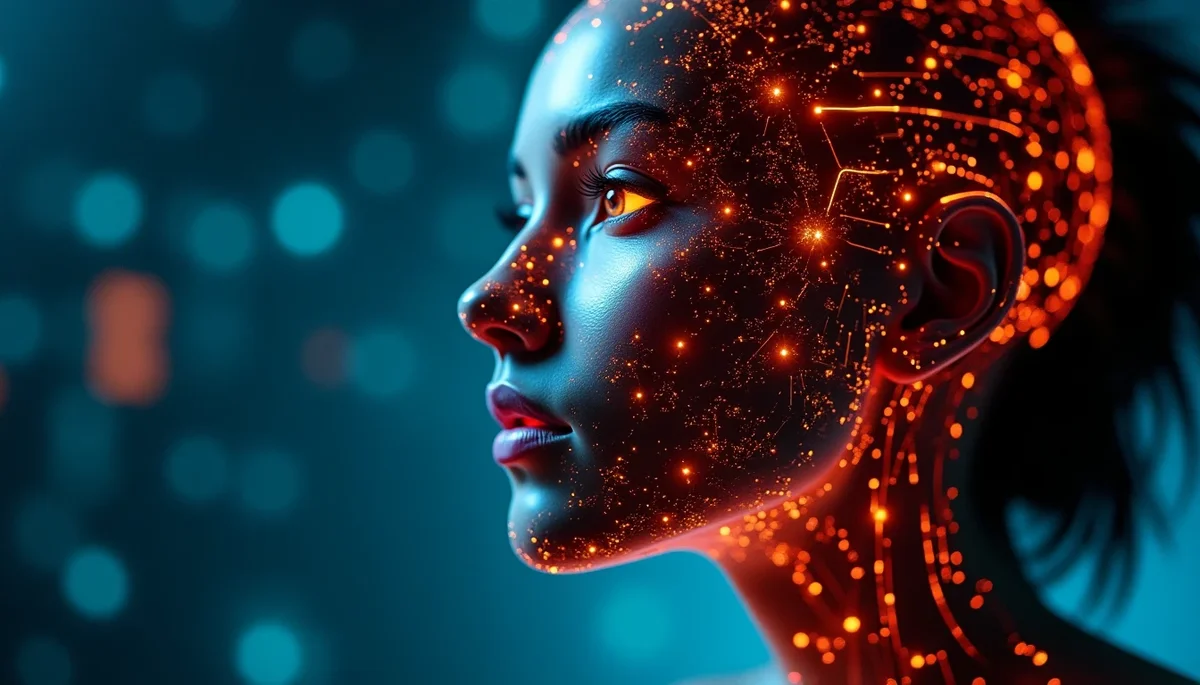
A quiet revolution in digital identity warfare surfaced this week as the U.S. Defense Advanced Research Projects Agency unveiled DiffProtect, an AI tool that doesn't merely obscure faces from recognition systems—it rewrites them entirely. Unlike previous countermeasures that added noise or visible distortions to photographs, this technique leverages the same generative technology powering modern image creation to fundamentally alter facial features while maintaining photorealistic appearance. The implications ripple far beyond military applications, raising profound questions about the nature of identity itself in an age where seeing no longer guarantees believing.
The timing proves particularly striking. As governments worldwide accelerate biometric identification systems—Gabon just signed an agreement with the United Nations Capital Development Fund to modernize its financial ecosystem and bank the 54 percent of adults currently outside formal systems—the tools to evade such surveillance grow equally sophisticated. We're witnessing an arms race between identification and anonymity, between the watchers and those who would remain unseen. Disney's newly announced $1 billion licensing deal with OpenAI, granting access to iconic characters for Sora's deepfake-capable video generation, only accelerates the erosion of visual authenticity.
Meanwhile, Earth's magnetic field continues absorbing punishment from our increasingly active sun. Another geomagnetic storm struck overnight December 11, the latest in a series of disturbances as coronal mass ejections and solar flare activity remain elevated heading into 2026. NASA monitoring shows near-Earth space conditions staying unsettled, with the combined influence of multiple solar events keeping magnetometers fluctuating. For those watching prophetic patterns, the convergence of signs in the heavens with technological deception capabilities echoes ancient warnings about the difficulty of discerning truth in the last days.
The ground shakes as well. Japan recorded multiple earthquakes December 12, including a magnitude 4.9 tremor near Ami and a 4.6 quake east of Yokohama, both at depths around 55-60 kilometers. While neither triggered tsunami warnings, the Pacific Rim's seismic activity serves as constant reminder of the region's instability. South of Tonga, another 4.9 magnitude event added to the day's tally, continuing a pattern of persistent global seismic unrest.
In the Middle East, the fragile architecture of ceasefire and coalition continues crumbling. Israeli warplanes carried out at least a dozen attacks across southern Lebanon on December 12, targeting what the military claims are Hezbollah training facilities in the Jezzine and Zahrani areas. These near-daily violations have effectively gutted the year-old ceasefire, with soldiers reporting Hezbollah members approaching IDF positions while carrying agricultural tools—a dangerous ambiguity that tests rules of engagement. Israel simultaneously approved 19 new settlements in the occupied West Bank, drawing sharp criticism from Ireland, which advances legislation to restrict trade with settlement-operating companies.
Sudan's humanitarian catastrophe deepens as war economy dynamics entrench themselves. Gold smuggling routes, hyperinflation, and deliberate starvation tactics fuel what analysts describe as an escalating crisis with no end in sight. The Saudi-Emirati power struggles playing out in both Yemen and Sudan reveal the fractured nature of any potential stabilization coalition for Gaza—the same regional powers positioning themselves as peacemakers have yet to resolve conflicts that have claimed hundreds of thousands of lives.
The Association for the Advancement of Artificial Intelligence released discussion panels this week examining the trajectory toward artificial general intelligence, with leading researchers debating timelines and safety frameworks. As AI systems grow capable of rewriting reality itself—faces, videos, voices—the question of what constitutes truth becomes increasingly urgent. The ancient prophet Daniel spoke of a time when knowledge would increase dramatically while many would run to and fro; we appear to be living in that acceleration. Those watching these developments should note how quickly the infrastructure for both total identification and total anonymity advances simultaneously—a paradox that may define the coming years.