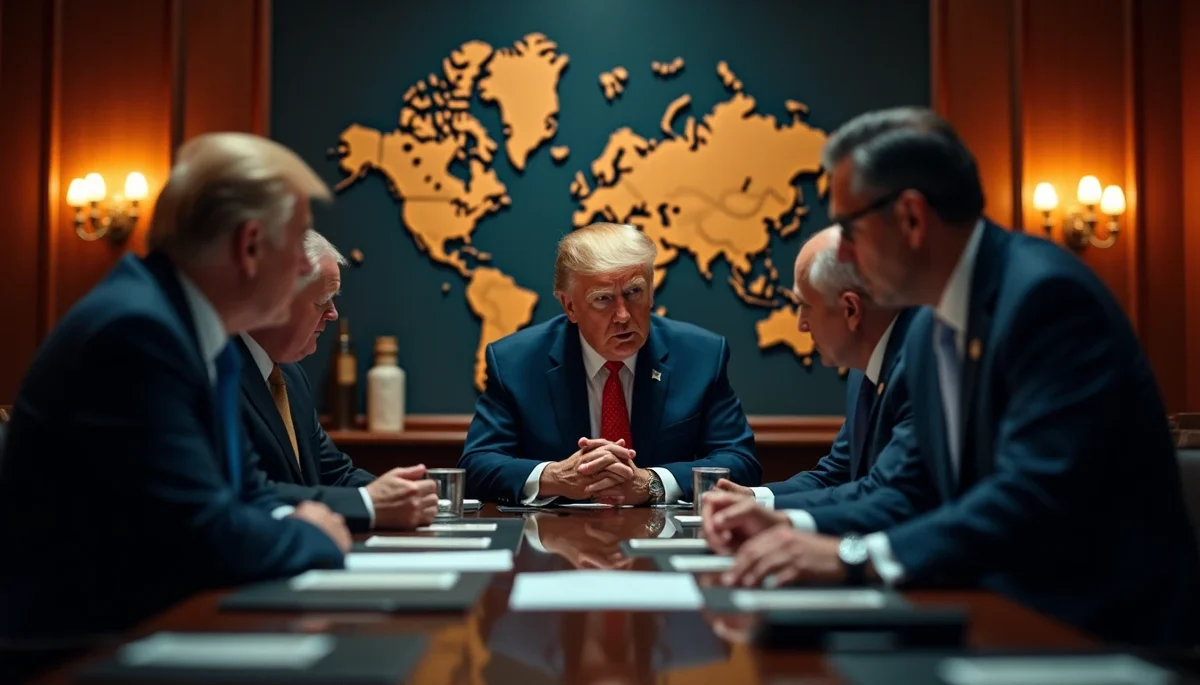
The intersection of concentrated wealth, political power, and ideological movements rarely announces itself so clearly. This week, federal filings reveal that cryptocurrency exchanges have funneled more than $21 million into MAGA Inc., President Trump's super PAC, with Foris Dax—parent company of Crypto.com—contributing $20 million in two separate transfers, while Gemini Trust added $1.5 million in USDC stablecoin converted to dollars. The timing is striking: these contributions arrive as TD Cowen analysts warn that comprehensive crypto market structure legislation may now slip to 2027 or even 2029, leaving the industry in regulatory limbo while its largest players bet heavily on political outcomes.
The financial maneuvering unfolds against a backdrop of Democratic billionaires facing scrutiny for their own funding patterns. A growing list of wealthy donors has reportedly channeled millions into nonprofits with alleged ties to organizations now under federal investigation, including groups that mobilized pro-Maduro demonstrations within twelve hours of the Venezuelan dictator's capture. Secretary of State Marco Rubio, speaking on CBS's Face the Nation, framed the Maduro operation as part of a broader campaign against Iranian and Hezbollah influence in the Western Hemisphere—a connection that transforms a Latin American intervention into a node in a much larger geopolitical network.
Meanwhile, in New York City, the inauguration of Mayor Zohran Mamdani has energized the radical left at a moment of ostensible conservative ascendancy. His newly appointed 'Tenant Czar,' Cea Weaver, has announced intentions to systematically restructure private property rights in the city—rhetoric that echoes collectivist movements of the past century. The juxtaposition is jarring: billionaires pouring unprecedented sums into political action committees while activists in America's financial capital openly advocate dismantling the property frameworks that generated that wealth.
The Middle East remains volatile despite nominal ceasefires. Israeli forces conducted strikes against Hezbollah and Hamas infrastructure in Lebanon on Monday, targeting weapons storage facilities both above and below ground. In Gaza, artillery and helicopter attacks killed a five-year-old girl and her uncle in al-Mawasi, bringing the death toll since October's truce to at least 422 Palestinians. Twelve Israeli military vehicles entered the Syrian village of Saida al-Golan in the Quneitra countryside, extending Israel's post-Assad territorial presence even as Syrian and Israeli delegations negotiate in Paris under American mediation.
Prime Minister Netanyahu reportedly sent a message to Tehran through Vladimir Putin, assuring Iran that Israel 'doesn't want war'—a diplomatic backchannel that reveals the complexity of great power relationships in the region. Yet Iran's internal stability appears increasingly fragile: protests have now claimed at least 35 lives, including four children, with over 1,200 arrested across 27 of the country's 31 provinces. The ancient pattern of empire and upheaval continues, as the prophet Daniel once observed of kingdoms that rise and fall like the shifting of iron and clay.
China's financial associations have quietly reclassified Real-World Asset tokenization alongside stablecoins and crypto mining as illegal—a move that signals Beijing's determination to maintain sovereign control over financial infrastructure even as Western nations debate regulatory frameworks. The contrast illuminates a fundamental divergence: decentralized finance promises liberation from state control, yet its largest advocates now seek influence through the most traditional mechanism imaginable—funding political campaigns.
For those watching these converging currents, the pattern suggests a period of intensifying competition between centralized and decentralized power structures, between nationalist and globalist visions, between traditional property rights and collectivist alternatives. The billions flowing into American politics, the proxy conflicts stretching from Caracas to Beirut, the protests shaking Tehran—these are not isolated events but symptoms of a global order under profound stress. What emerges next will depend on which coalitions prove most resilient when the fault lines finally shift.