
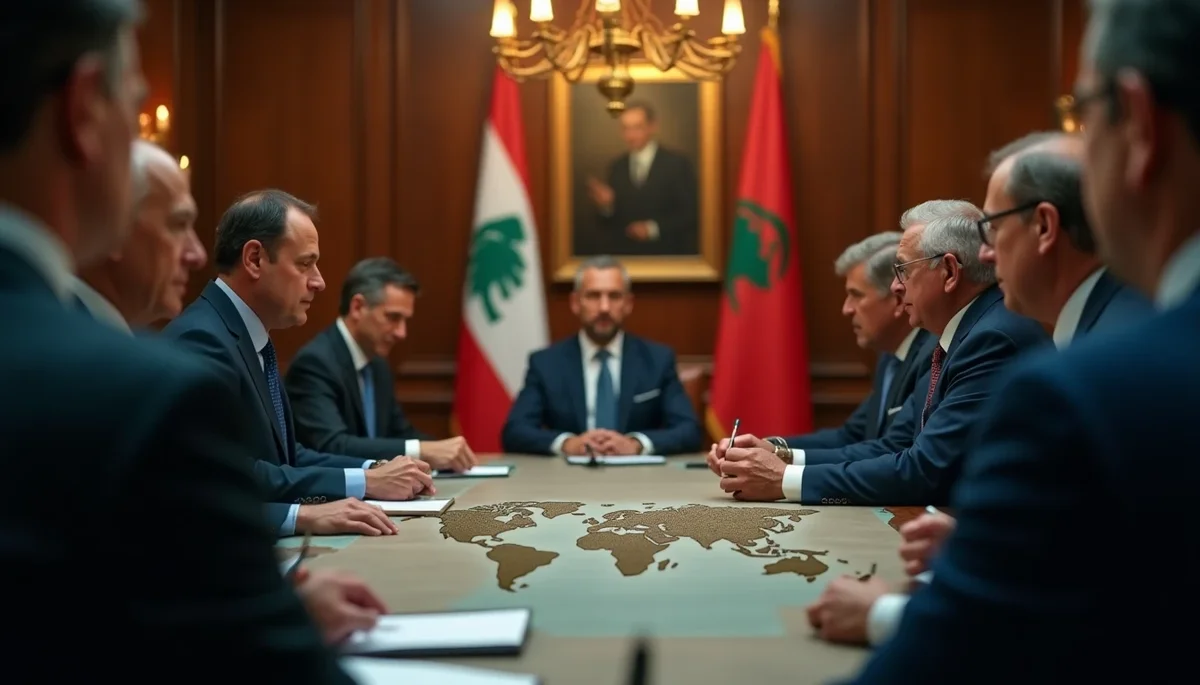
The fragile architecture of Middle Eastern peace suffered another blow this week as Israeli forces launched what military officials describe as 'massive' airstrikes across southern Lebanon, targeting Hezbollah training camps despite a ceasefire agreement ostensibly in effect. The IDF confirmed multiple waves of attacks that damaged homes and buildings throughout the region, raising urgent questions about whether the diplomatic framework can hold.
The strikes come as bipartisan U.S. lawmakers intensify pressure on Lebanon to disarm Hezbollah without delay, warning that failure to act constitutes a violation of ceasefire commitments and risks renewed warfare under Iranian-backed militia control. This diplomatic squeeze reflects Washington's growing frustration with the slow pace of implementation—a pattern biblical scholars recognize from the prophet Jeremiah's warnings about those who 'cry peace, peace, when there is no peace.'
Meanwhile, the humanitarian situation in Gaza continues to generate controversy. Anti-Hamas activist Ahmed Fouad al-Khatib has accused the terror organization of deliberately hiding tons of baby formula in Health Ministry warehouses to worsen civilian suffering and fuel accusations of Israeli-orchestrated starvation. The allegations, reported by the New York Post, suggest a calculated strategy to weaponize humanitarian crisis narratives. Israel's Shin Bet chief has now called for a state inquiry as 'the only way' to properly investigate the October 7 Hamas attack, signaling internal pressure for accountability that extends beyond the battlefield.
In Jerusalem, subdued Christmas celebrations mark the season in the Holy City, where the tree lighting at the YMCA and a towering Santa in the Old City represent quiet resilience amid regional turmoil. 'What better place to celebrate the Savior than in Jerusalem?' one resident remarked—a sentiment that resonates with pilgrims who recognize the ancient city's role as the prophetic epicenter of both conflict and ultimate redemption.
Across the Pacific, the earth itself seems restless. A magnitude 4.6 earthquake struck 95 kilometers east-northeast of Yokohama, Japan, while a 4.5 magnitude tremor shook waters near Russia's Severo-Kuril'sk. Alaska experienced multiple seismic events near Yakutat, including a 3.2 magnitude quake that registered a ShakeMap intensity of IV. These scattered tremors, while individually modest, contribute to what seismologists track as ongoing tectonic stress patterns across the Pacific Ring of Fire.
The convergence of geopolitical and technological upheaval finds sharp expression in Washington, where HSBC reports that policy tensions surrounding tokenized equities have 'escalated sharply' in recent weeks. Major Wall Street firms and crypto industry leaders are clashing over competing visions for on-chain markets, with decentralized finance protocols drawing primary regulatory scrutiny. The American Federation of Teachers has warned the Senate Banking Committee that proposed crypto legislation puts pensions and 401(k)s at 'serious risk,' calling the approach 'as irresponsible as it is reckless.' Senator Cynthia Lummis expects a crypto market structure bill markup next week, setting the stage for a pivotal legislative battle over digital asset regulation.
Adding to concerns about technological overreach, a new study warns that Western universities—including MIT—have helped build China's digital surveillance apparatus using taxpayer funds. The research documents how advanced campuses in the United States, Canada, and the United Kingdom have contributed to what investigators call a 'digital dragnet,' raising profound questions about academic collaboration with authoritarian surveillance states.
For those watching prophetic patterns unfold, this moment presents a familiar convergence: wars and rumors of wars in the ancient lands, the earth groaning with seismic activity, and the rapid advancement of systems that could enable unprecedented economic control. The struggle over tokenized assets and digital financial infrastructure represents more than regulatory turf wars—it shapes the architecture through which future transactions may flow. As the prophet Daniel foresaw kingdoms rising and falling while technological marvels emerged in the last days, today's headlines suggest we are witnessing the infrastructure of that future being contested in real time.