
The Festival of Lights turned to mourning on Sydney's Bondi Beach Sunday evening when gunmen opened fire on a Hanukkah celebration, killing at least twelve people including one suspected attacker and wounding dozens more. Australian authorities have taken at least two suspects into custody while investigating the possible involvement of a third, with explosives discovered near a bridge adding to fears of a coordinated assault. Among the dead was Rabbi Eli Schlanger, a Chabad emissary who had visited the Temple Mount just six months ago—a poignant detail that underscores how violence against Jewish communities now spans from Jerusalem to the Pacific.
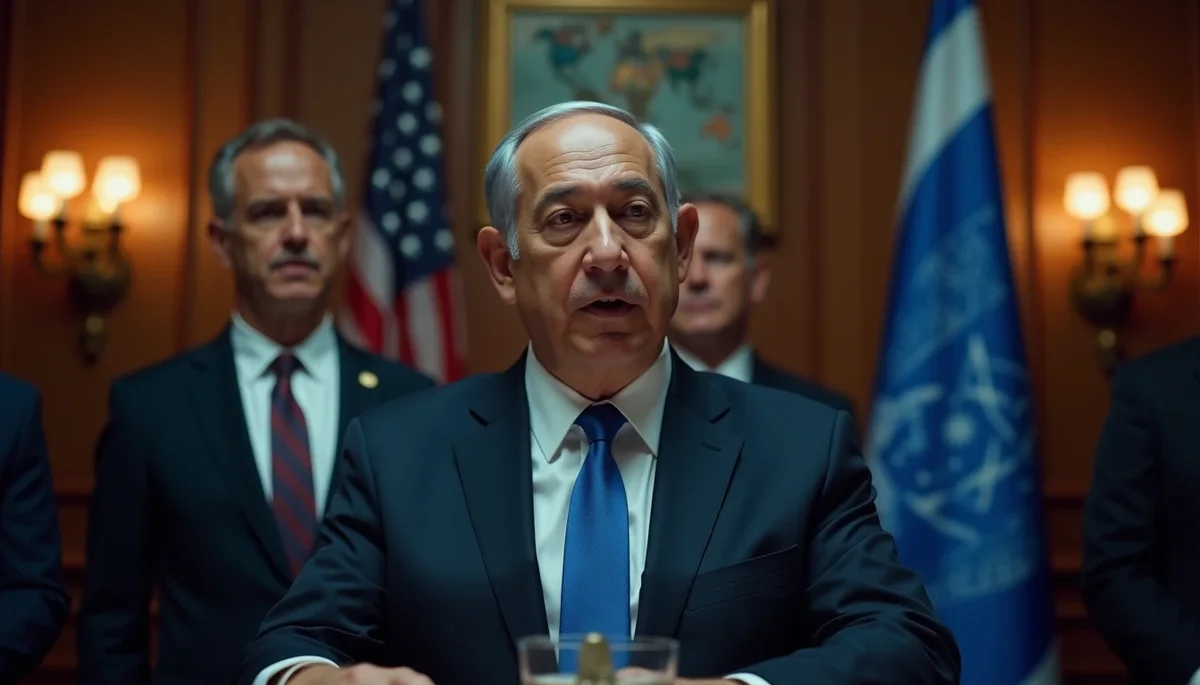
Israeli Prime Minister Benjamin Netanyahu wasted no time connecting the attack to broader geopolitical tensions, publicly accusing Australian Prime Minister Anthony Albanese of fueling antisemitism through his government's support for Palestinian statehood. 'I warned him,' Netanyahu declared, framing the massacre as the bitter fruit of policies he considers hostile to Israel. President Isaac Herzog interrupted a ceremony honoring lone immigrants to condemn the attack, later speaking with Sydney's Jewish leaders with a message both pastoral and defiant: 'The candles will be lit again.' The response from Tehran proved characteristically cynical—Iran's Foreign Ministry condemned the killings while its state media worked to link the attack to the Gaza conflict, prompting Israeli officials to award them 'the world record in deception.'
The Sydney tragedy arrives as the fragile Gaza ceasefire teeters on collapse. Israeli forces assassinated Raed Saad, a senior Hamas commander and October 7th planner, in a targeted strike on Gaza City Saturday. Hamas's chief negotiator warned the killing 'threatens the viability' of the ceasefire, calling for international intervention. In the West Bank, tensions simmer as settlers face accusations of escalating intimidation—one Knesset member reportedly told Arab citizens to 'go back to Gaza'—while the Israeli Supreme Court struck down the government's attempt to dismiss Attorney General Gali Baharav-Miara, who has challenged the coalition's policies.
Meanwhile, freed hostage Elizabeth Tsurkov offered a sobering perspective from her 903 days of captivity in Iraq. 'I still see Arabs as human beings,' she told Haaretz, acknowledging this is now 'an unpopular opinion in Israel after October 7.' Her words echo the prophet Micah's ancient call to 'do justice, love mercy, and walk humbly'—a standard that seems increasingly difficult to maintain when communities on all sides feel existentially threatened.
Across the globe, quieter battles over conscience and speech continue. The U.S. Supreme Court declined to hear the appeal of a California Christian baker prosecuted for refusing to create a cake for a same-sex wedding, while in Russia, dozens gathered in the Siberian city of Tomsk to protest Moscow's ban on the children's gaming platform Roblox—a rare public demonstration of dissent in wartime. The Department of Homeland Security has proposed requiring visa-waiver travelers to submit five years of social media history, prompting concerns about America's own quiet slide toward social scoring systems that critics compare to China's surveillance apparatus.
For those watching through the lens of Scripture, the convergence of these events carries unmistakable weight. The targeting of Jewish communities during their sacred festivals recalls Haman's lots in the Book of Esther—violence timed to desecrate holy seasons. The struggle over Israel's judiciary, the fate of Gaza's ceasefire, and the global rise of antisemitism all point toward what the prophet Zechariah described: Jerusalem becoming 'a cup of trembling' for all nations. As Hanukkah candles flicker in Sydney's grief-stricken community tonight, the ancient question remains: how long until light overcomes darkness? Watch the ceasefire negotiations closely this week, and pray for the peace of Jerusalem.